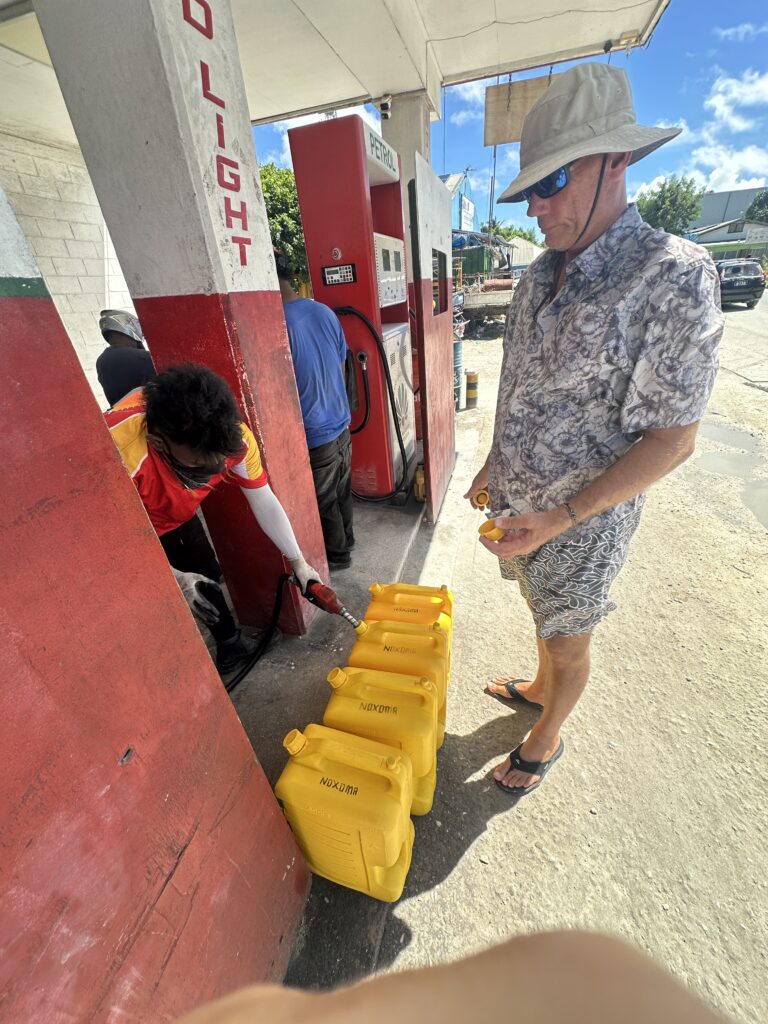
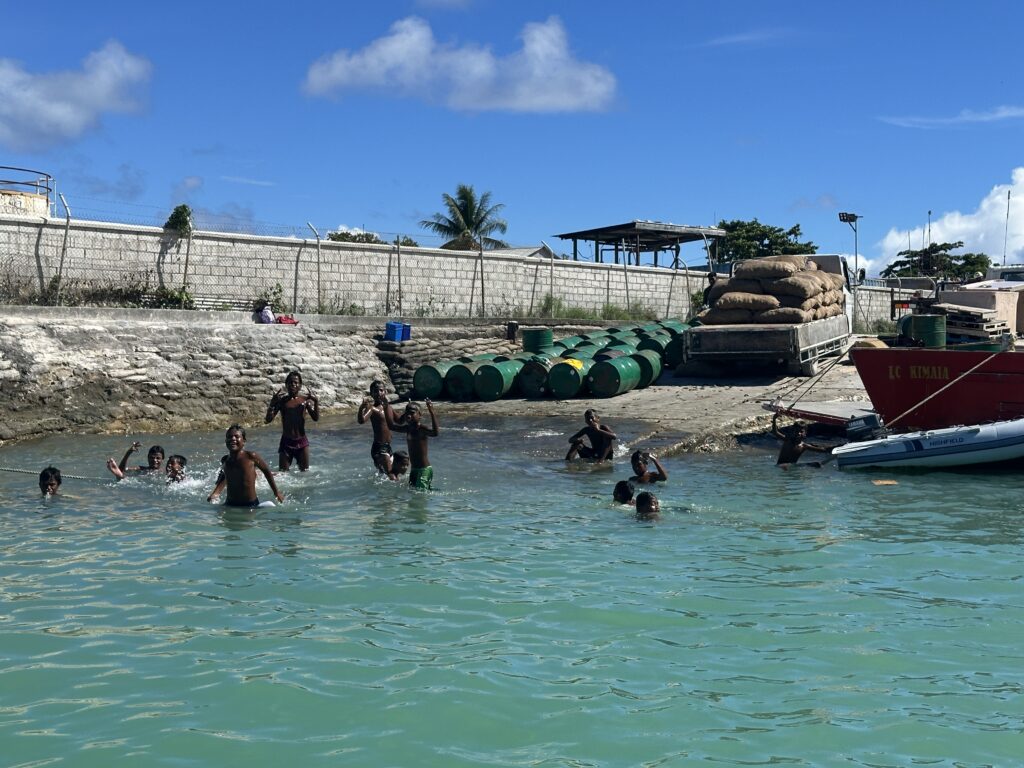
Arriving in Kiribati was quite different from many of the other Pacific islands we have visited. We anchored off Betio town, at the western end of Tarawa Atoll, surrounded by commercial shipping, industrial facilities, and numerous Chinese fishing vessels. Not exactly the tropical island scenery we have become accustomed to, but an interesting introduction to a country facing some significant challenges.
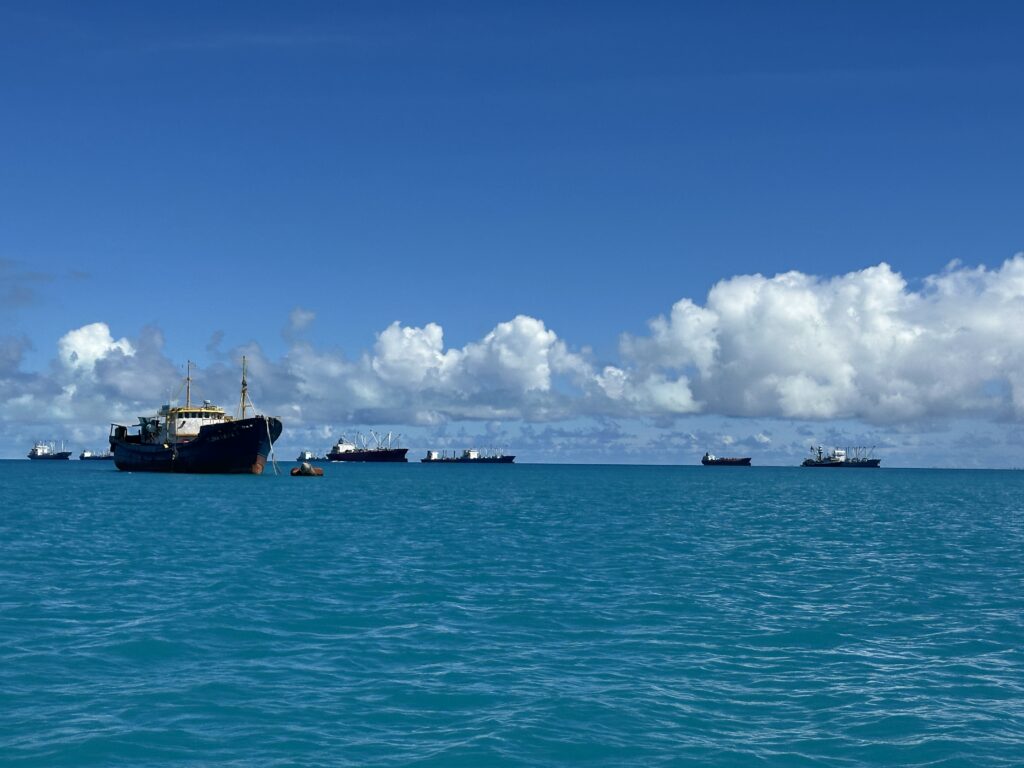
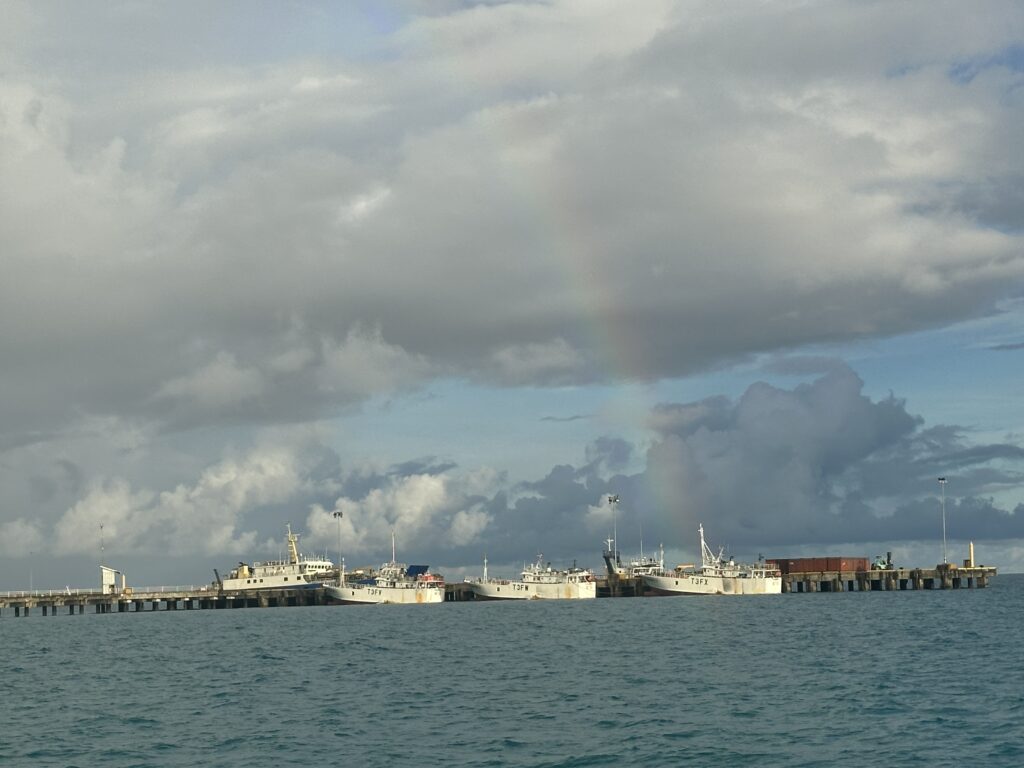
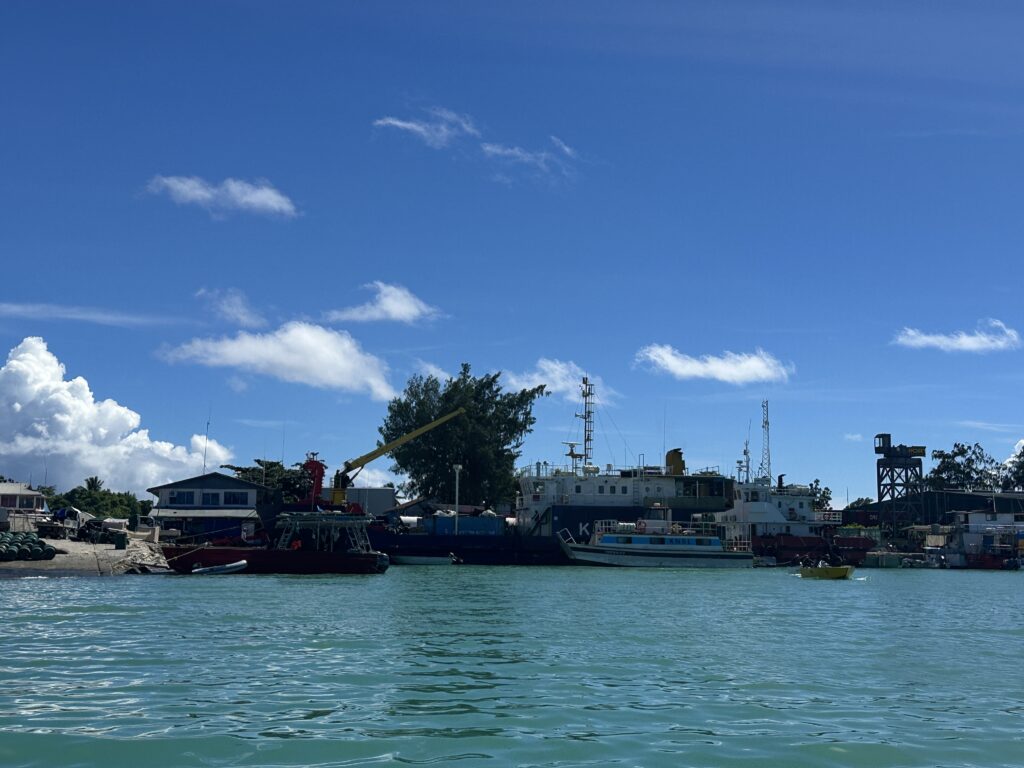
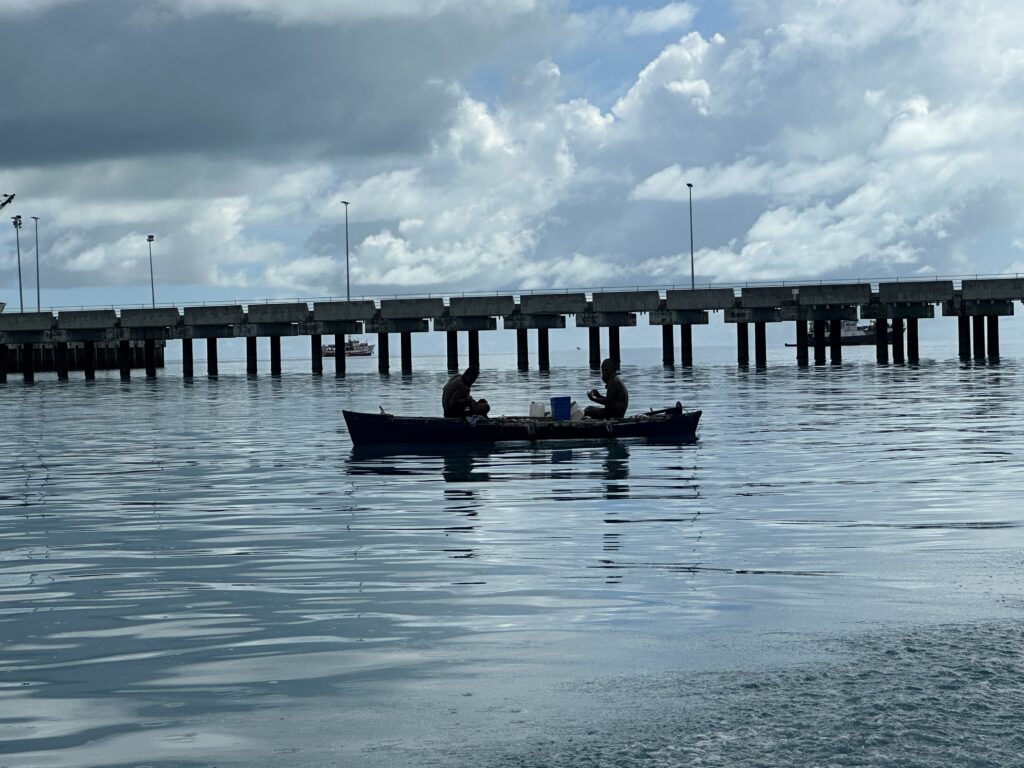
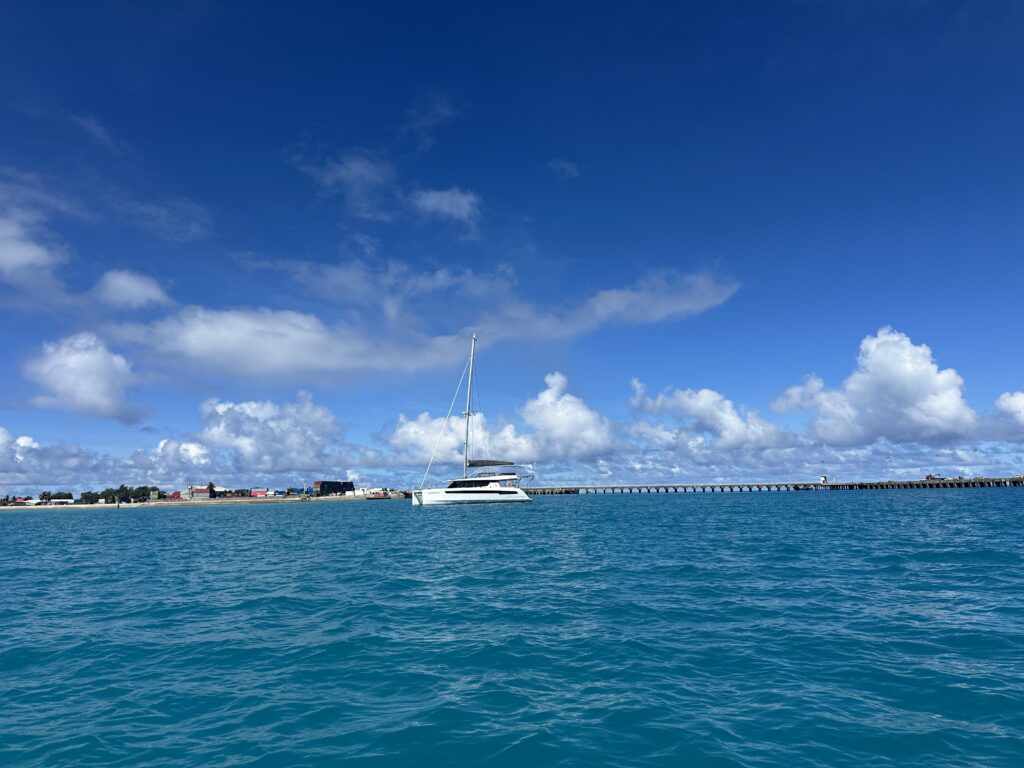
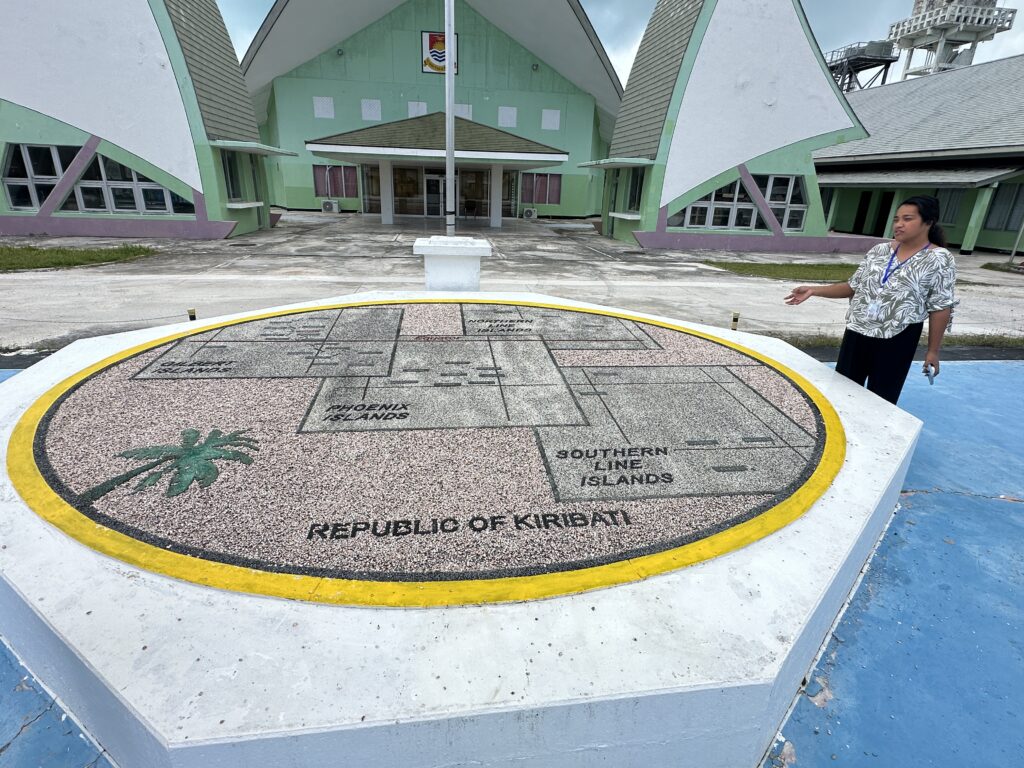
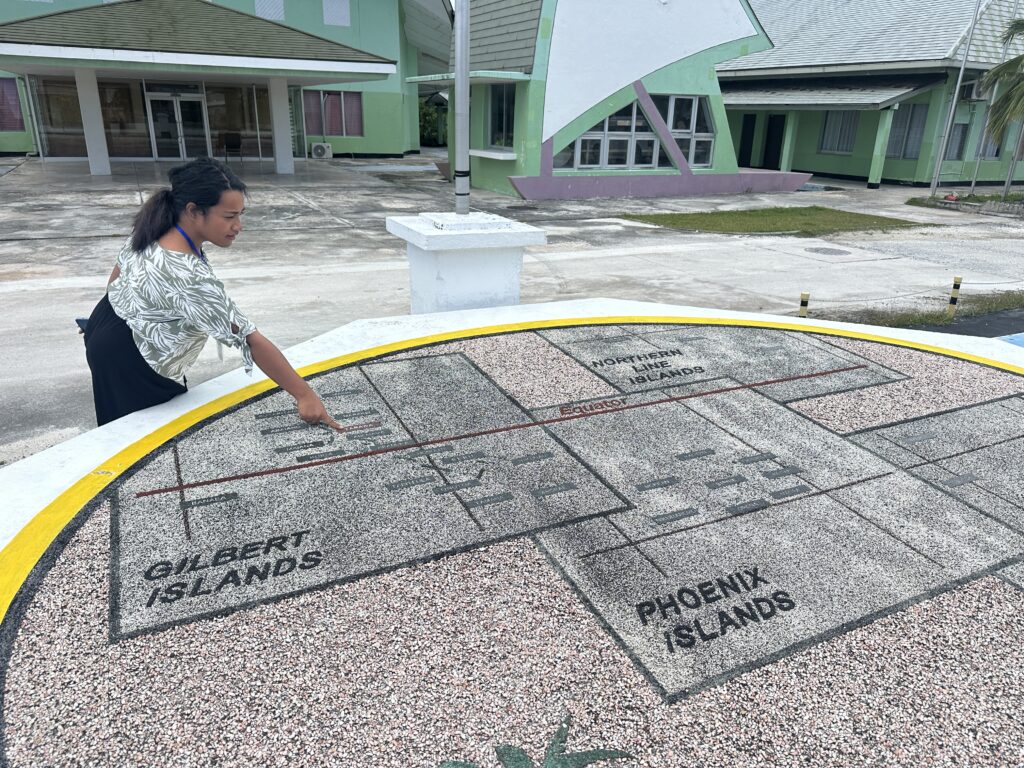
Kiribati (pronounced Kiribas) consists of 33 islands spread across three island groups: the Gilbert, Phoenix, and Line Islands. Although the total land area is only around 811 square kilometers, the islands are scattered across some 3.5 million square kilometers of ocean, stretching thousands of kilometers from east to west. The country has a population of approximately 136,000, with more than half living on South Tarawa, the political and administrative centre.
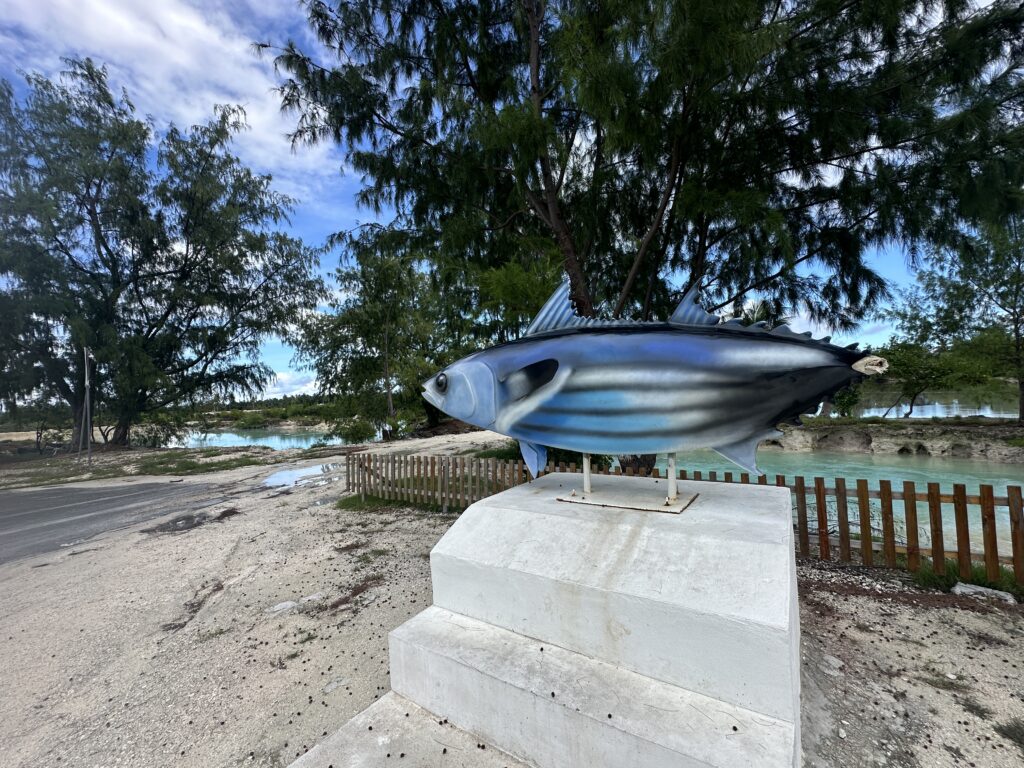
Kiribati has very few natural resources on land, and its economy depends heavily on the ocean. One of the government’s most important sources of income is selling fishing licenses to foreign fleets, including those from China, Japan, South Korea, and other countries. These licenses allow foreign vessels to catch tuna in Kiribati’s enormous exclusive economic zone.
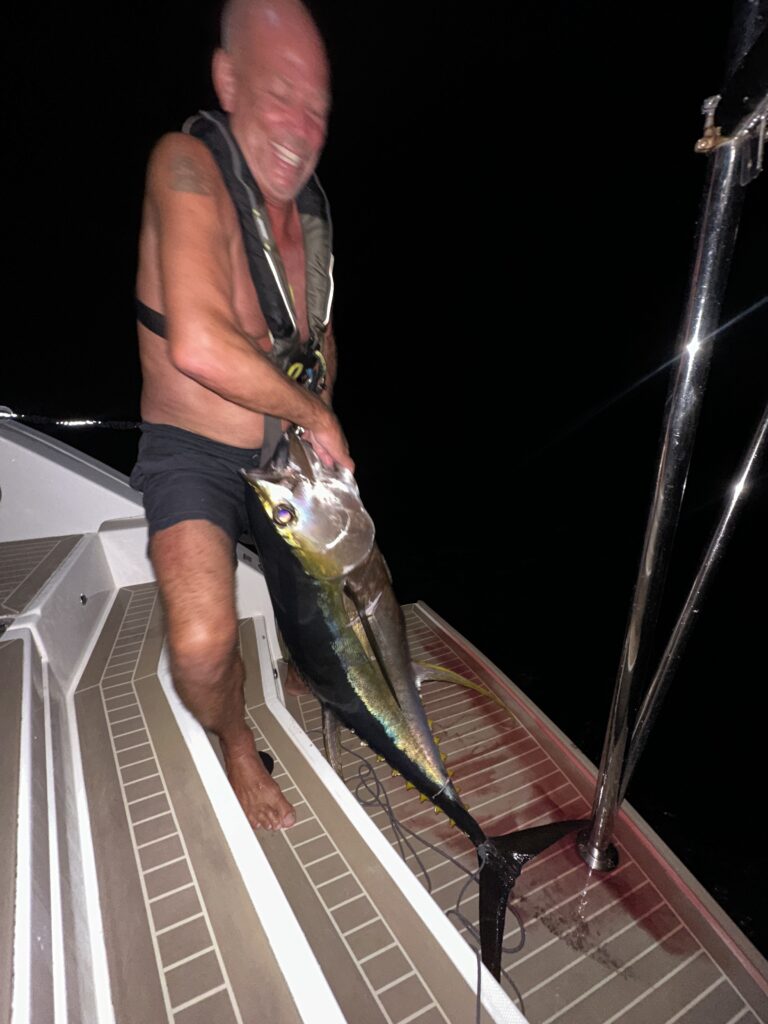
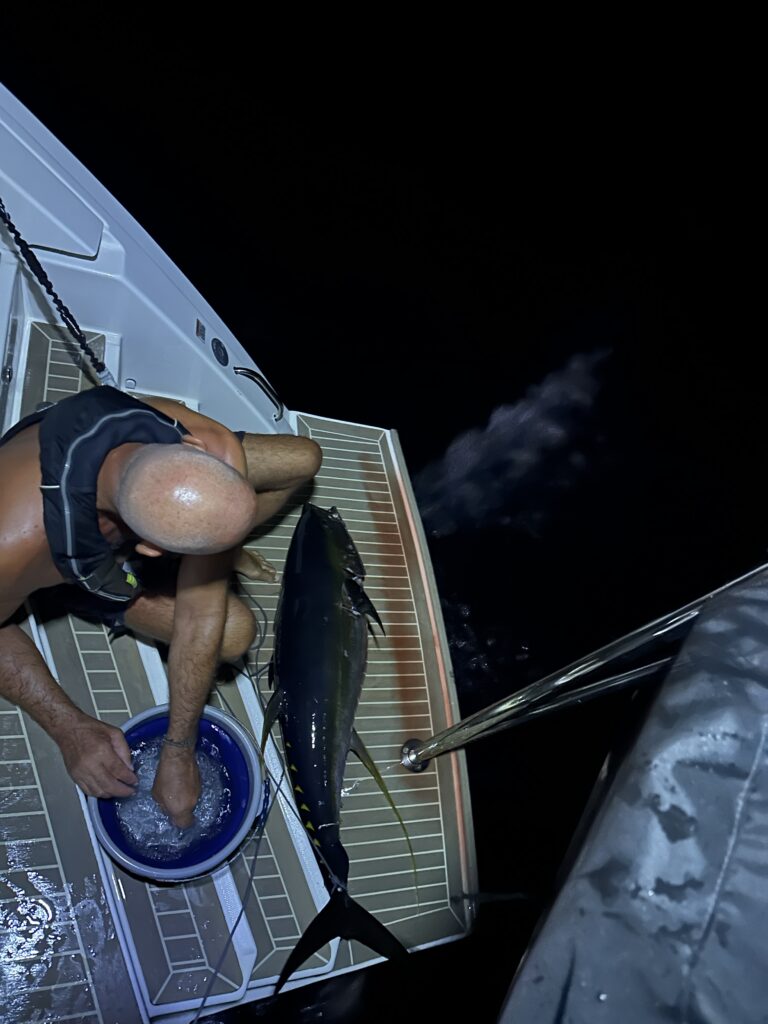
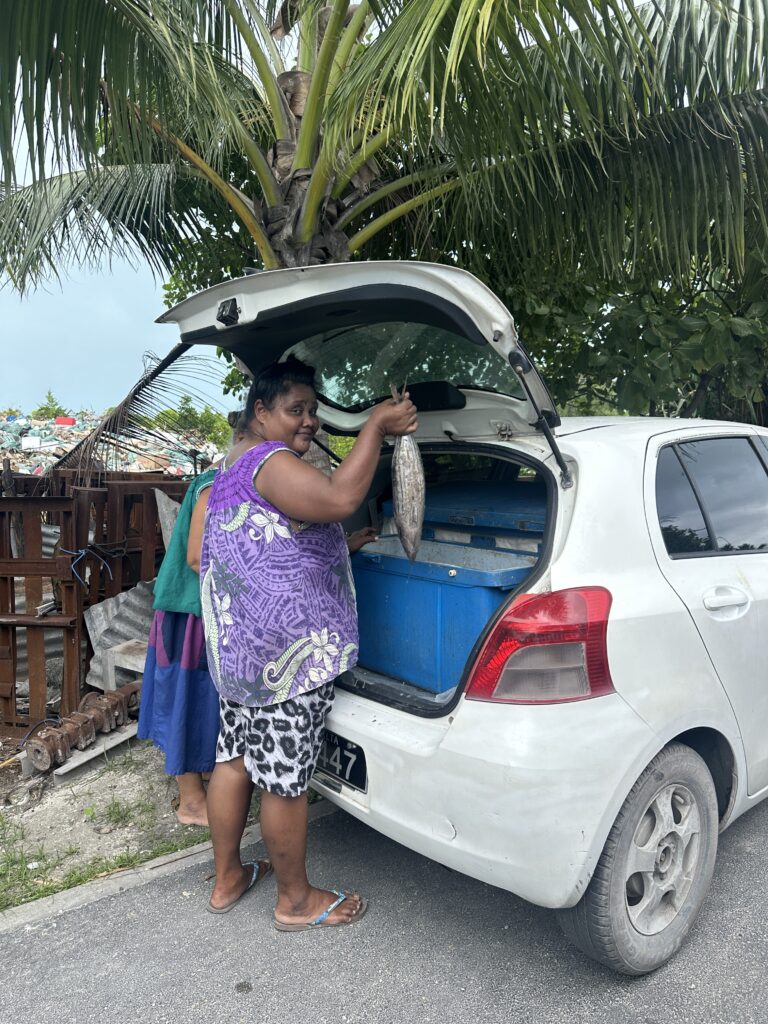
Tarawa calls themselves the tuna capital of the world, and we did experience the truth of that statement. We caught the largest tuna we have ever done on our passage from Tuvalu to Kiribati. It was a yellowfin tuna of 40 kgs, and of course it bit in the dark, after the captain had gone to bed. He did an extraordinary job of battling and conquering the strong fish, and two hours later, our freezers and fridges were filled up. We lived the rest of the passage of sashimi to lunch and tuna steak for dinner.
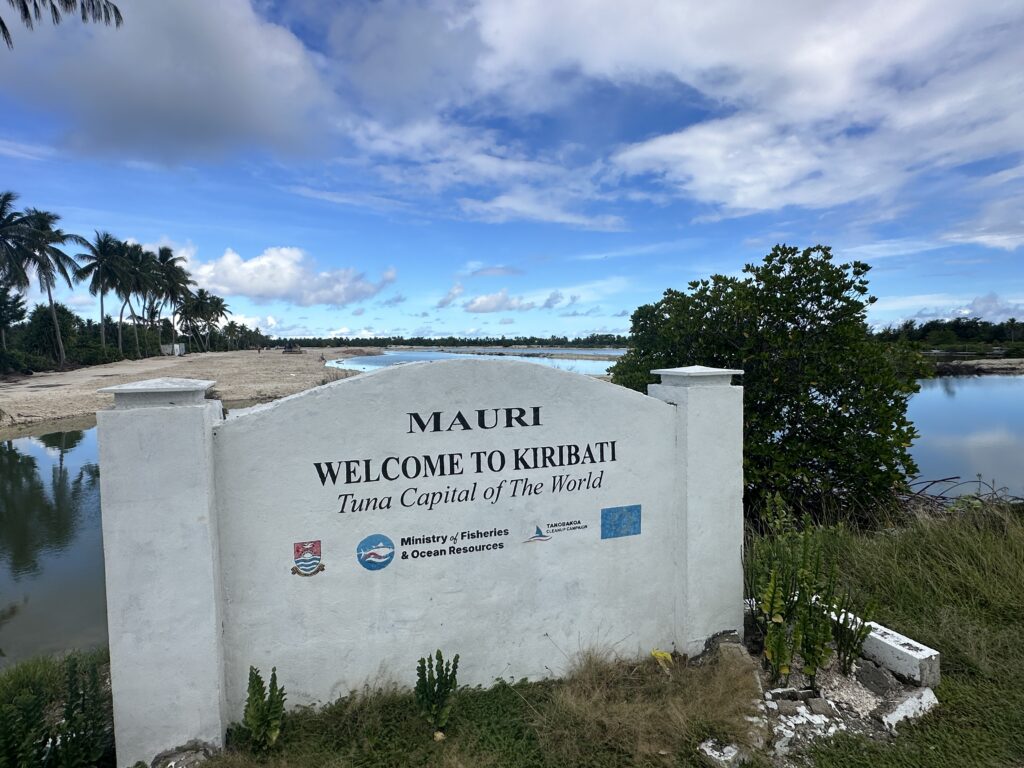
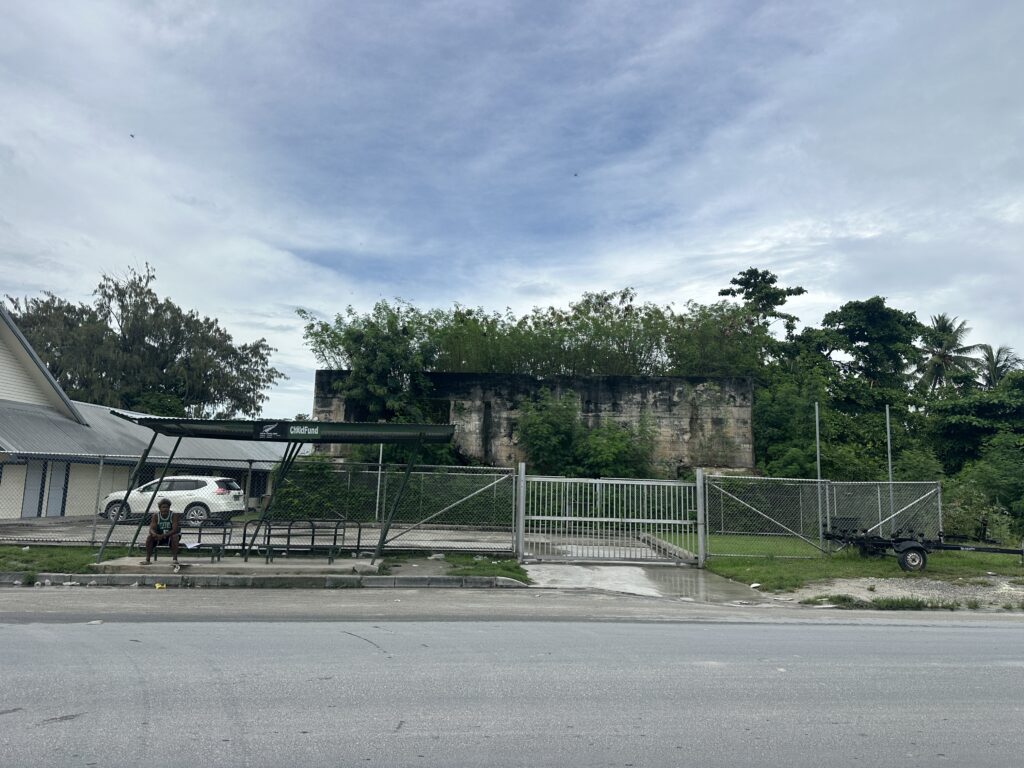
Betio, the port where we were anchored, has an important place in World War II history. In November 1943, it was the scene of the Battle of Tarawa, one of the bloodiest battles of the Pacific campaign. American forces fought Japanese defenders who had heavily fortified the small island, and thousands of soldiers lost their lives during just three days of fighting. Remnants of the war, including Japanese bunkers, coastal guns, and other fortifications, can still be found around Betio.
We had been warned about crime in Betio and were advised to be careful with our belongings. Walking around, however, what struck us most was the poverty and the difficult living conditions. Many people walked barefoot, and we saw numerous traditional houses made from local materials, with thatched roofs and open sides. Some were built on stilts over the water, particularly around the fishing communities. Houses were often very close together, with little space between the ocean on one side and the lagoon on the other.
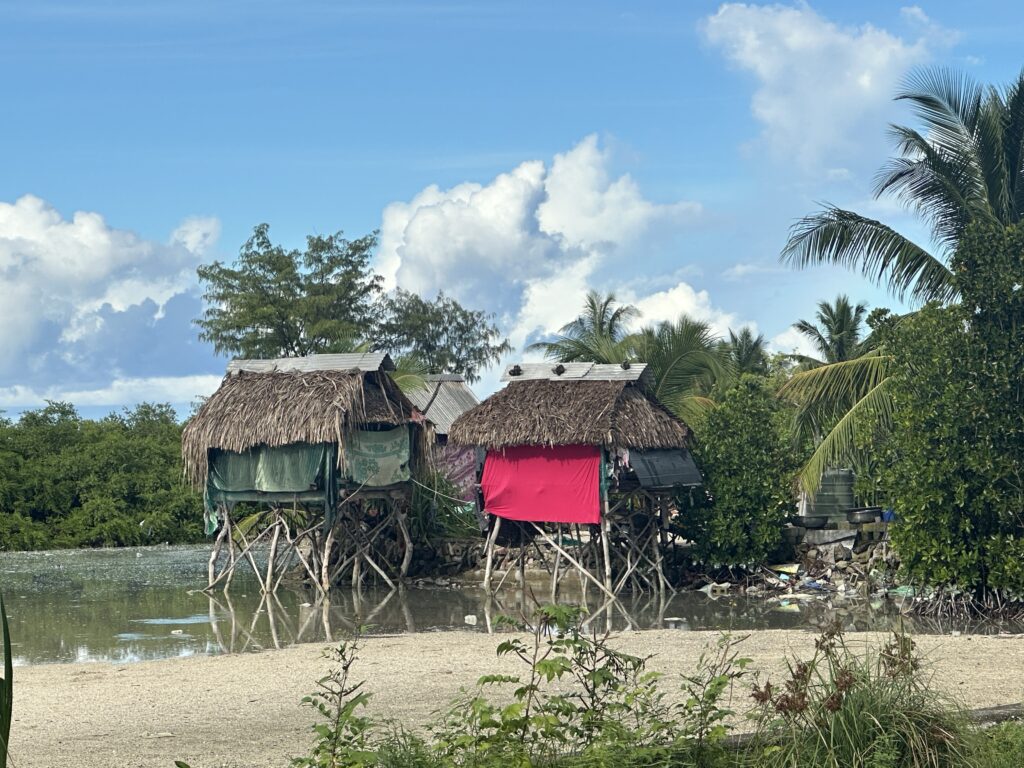
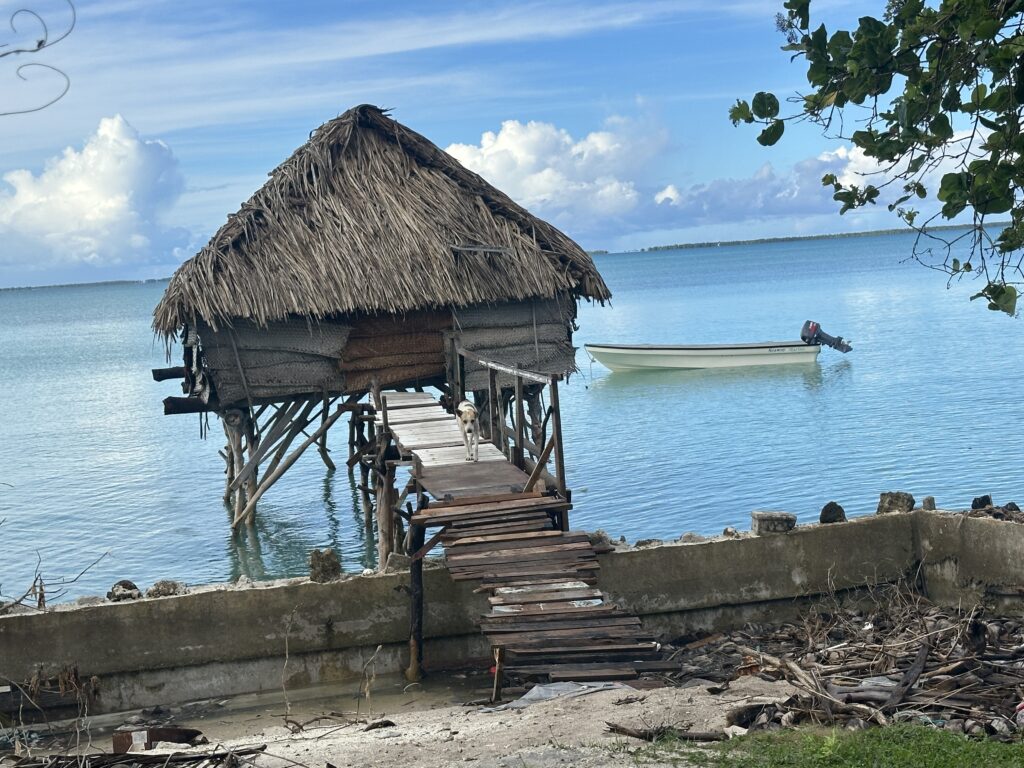
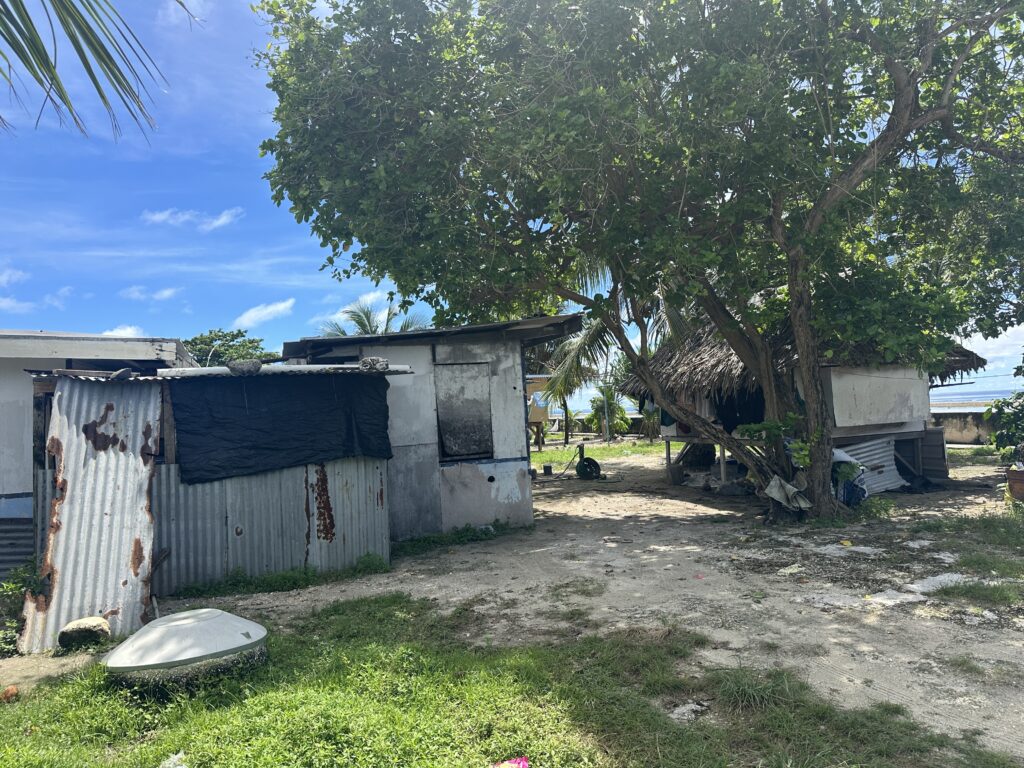
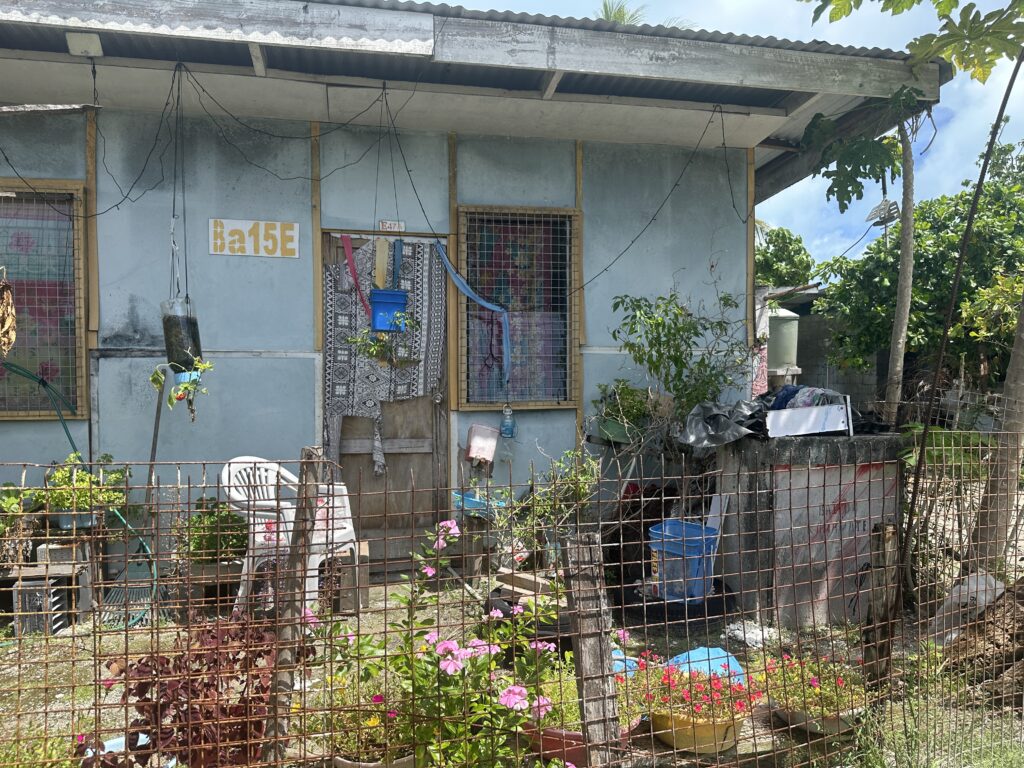
Everyday life unfolded along the busy streets, with small grocery stores, roadside vendors selling their goods, and motorcycles passing by. We also noticed quite a few closed shops and abandoned or rundown structures, including an old Ferris wheel that had clearly seen better days. It was an interesting mix of everyday activity and signs of economic hardship, giving us a glimpse of life in this densely populated part of Kiribati.
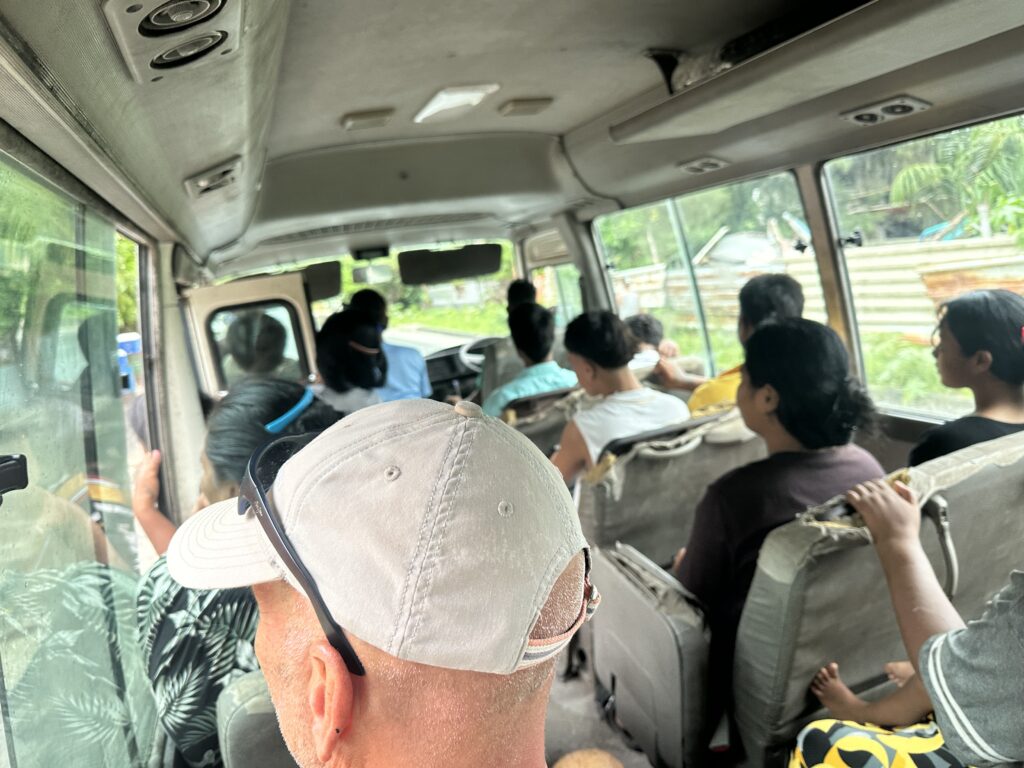
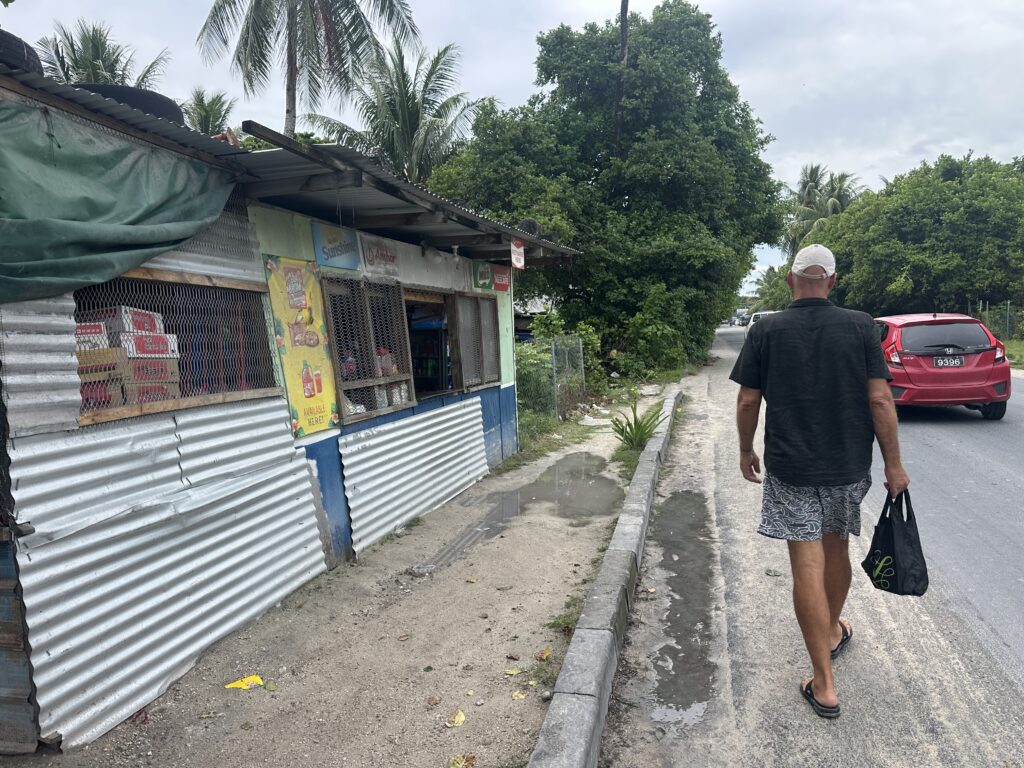
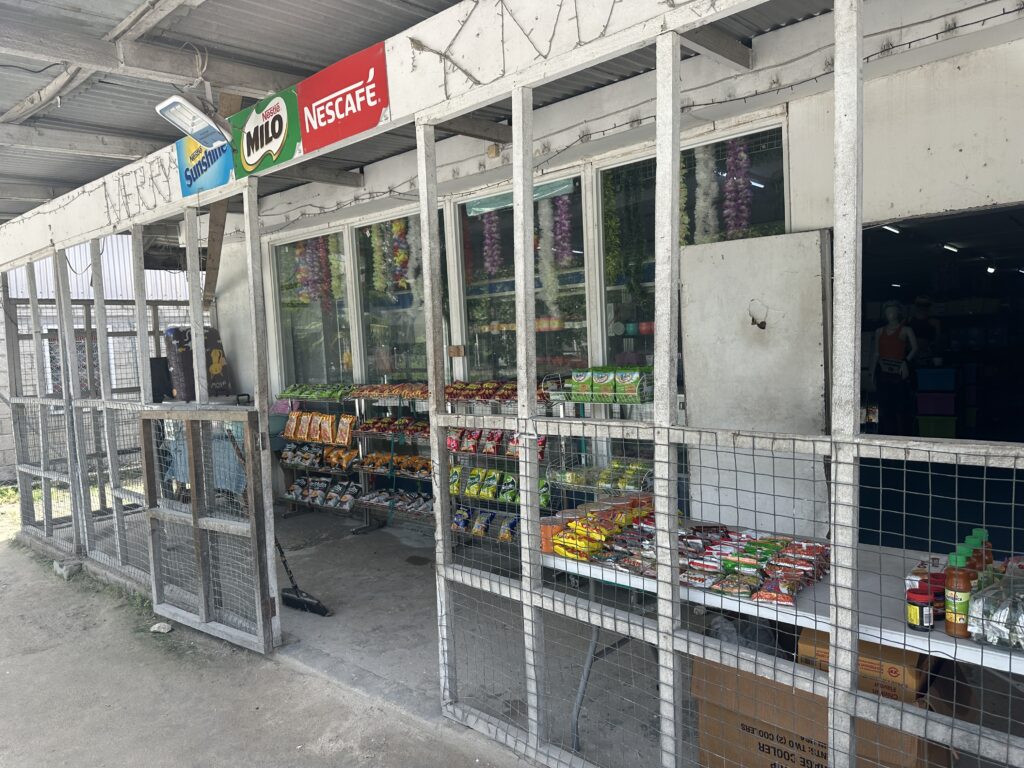
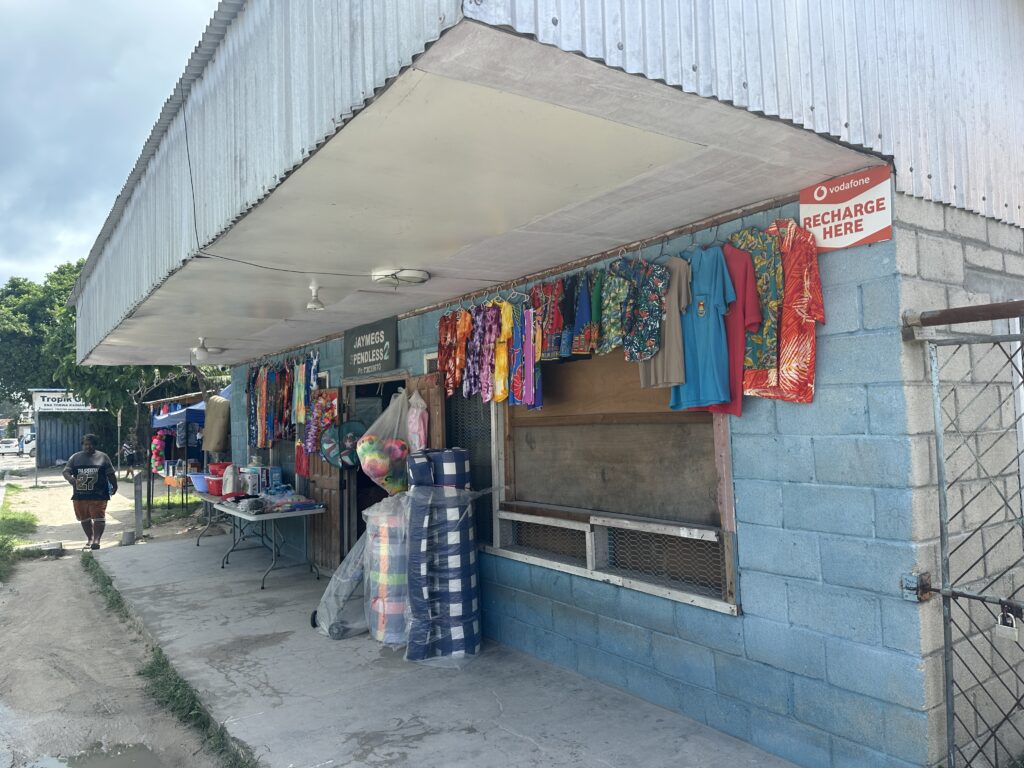
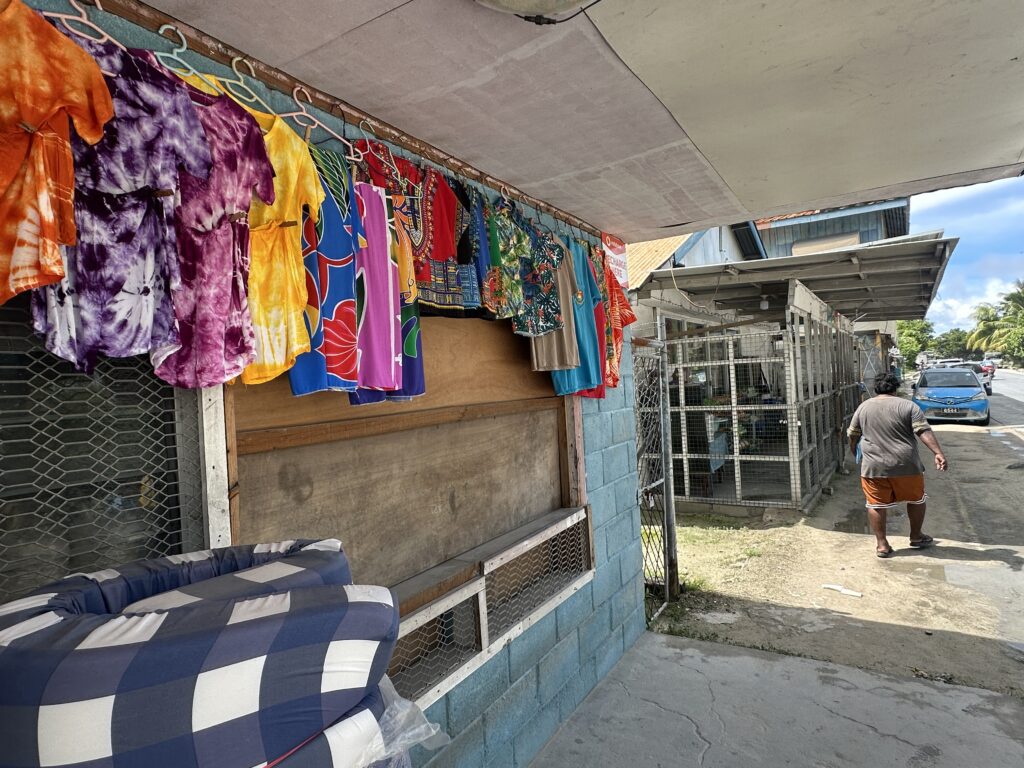
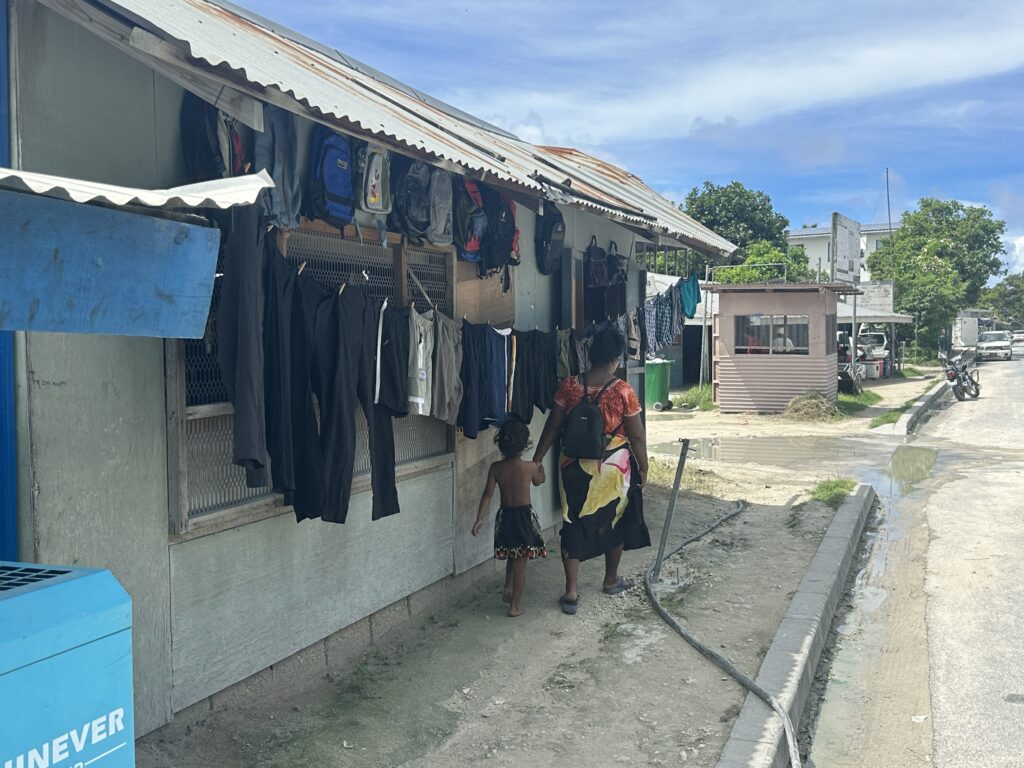
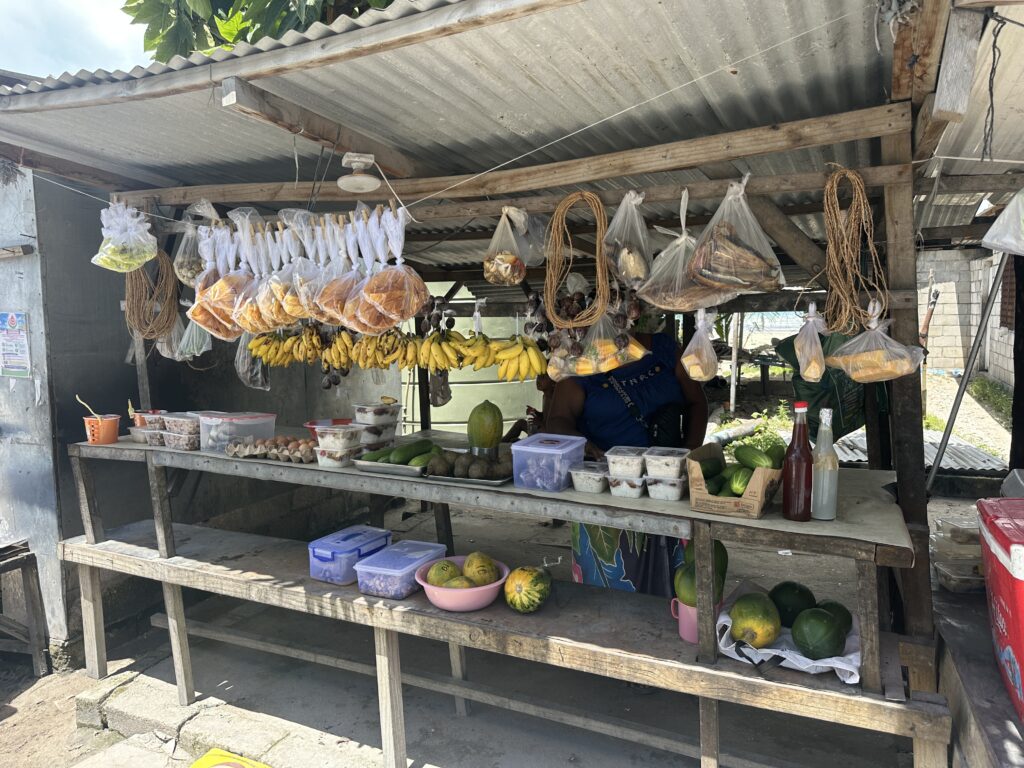
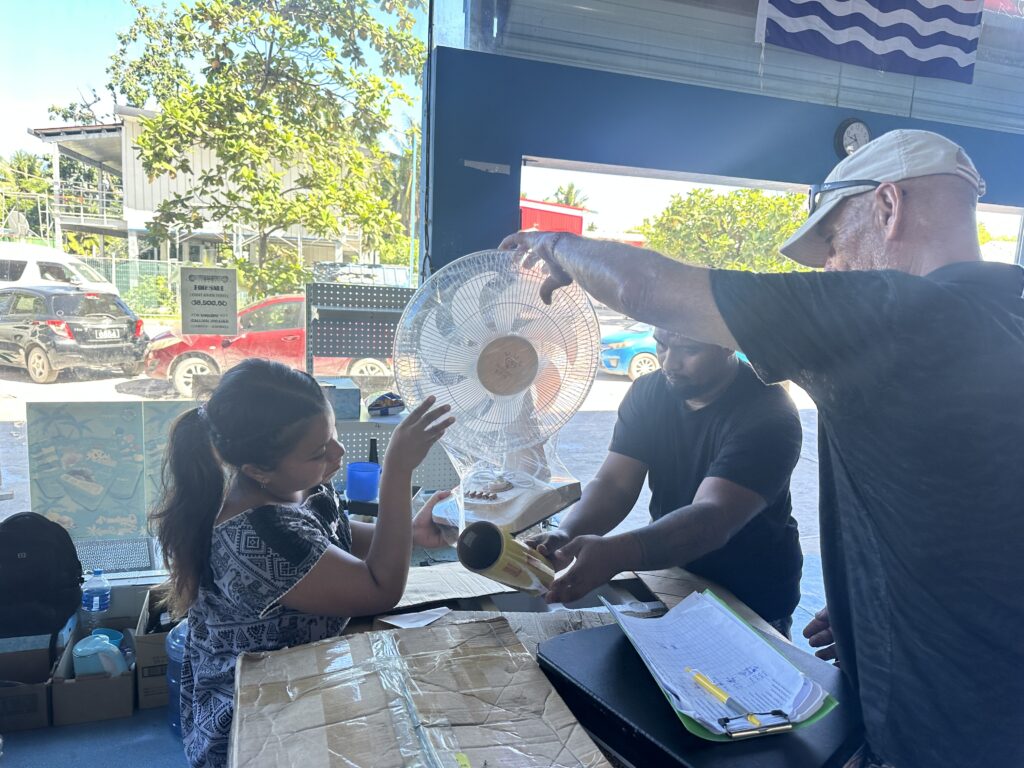
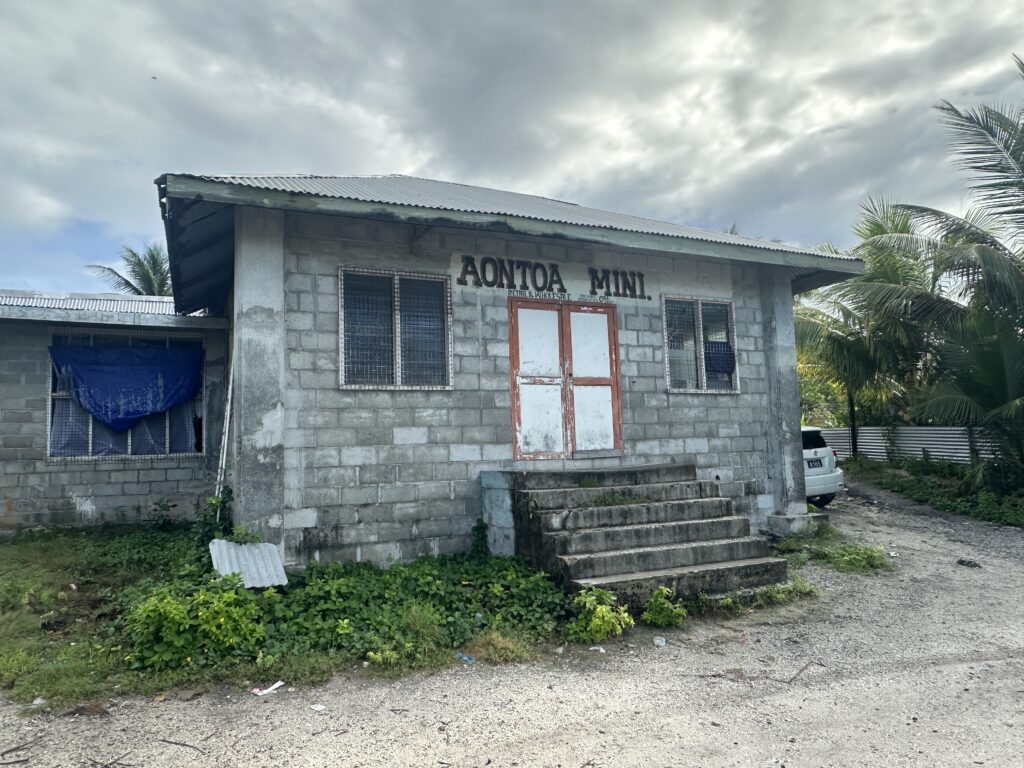
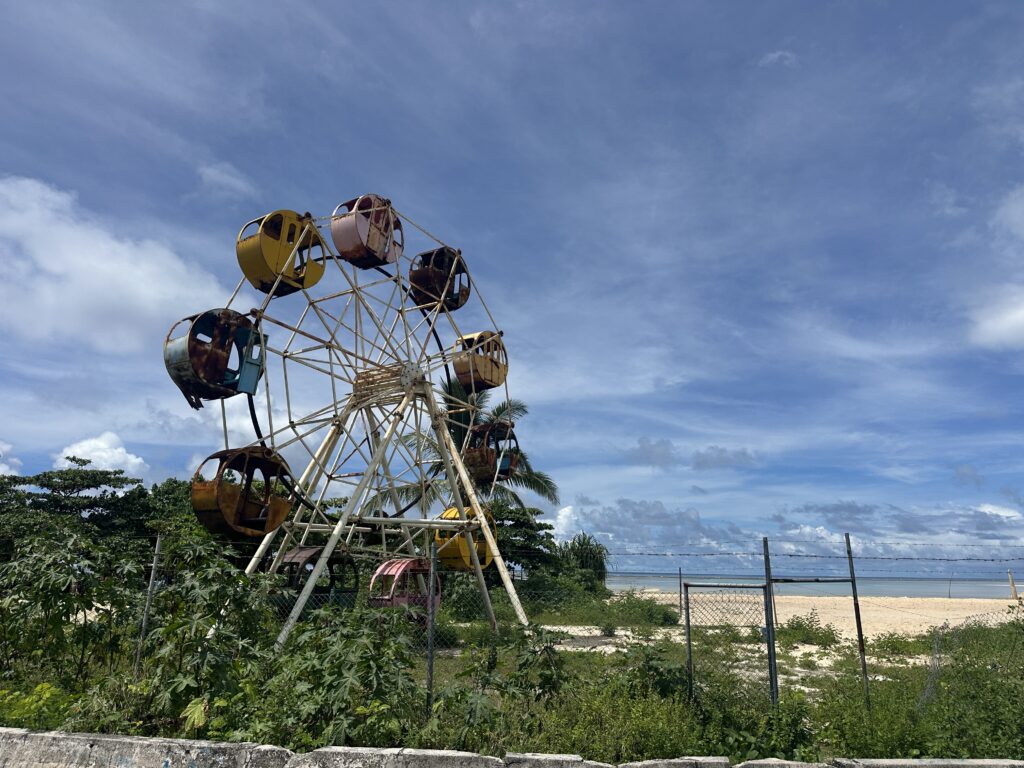
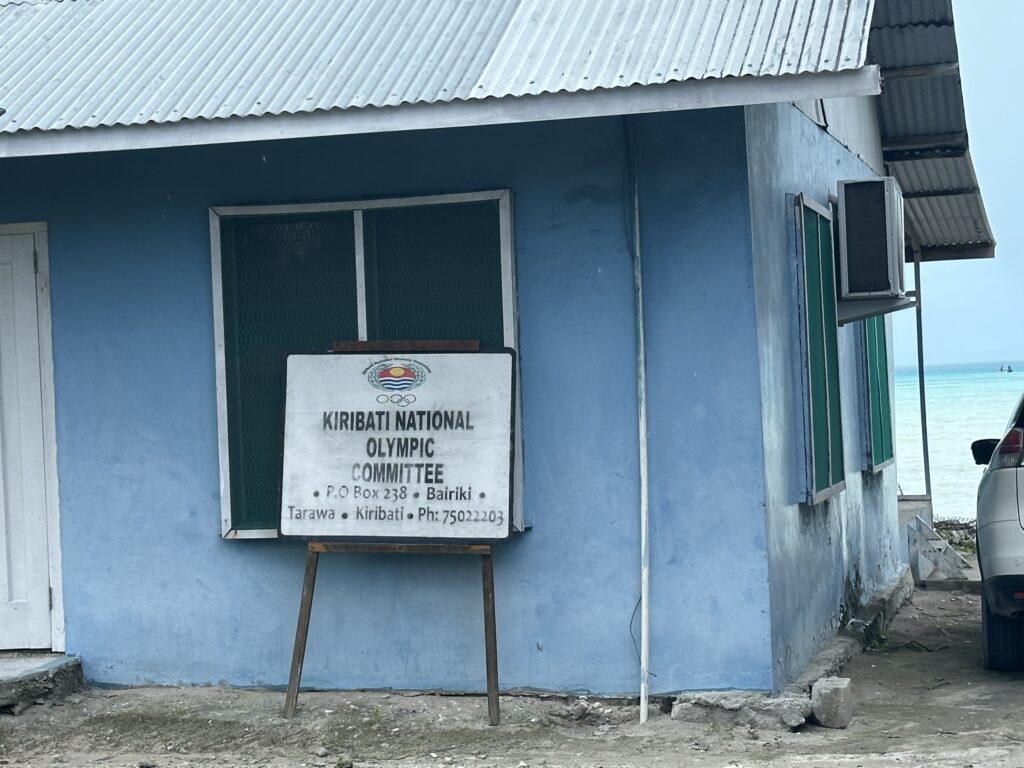
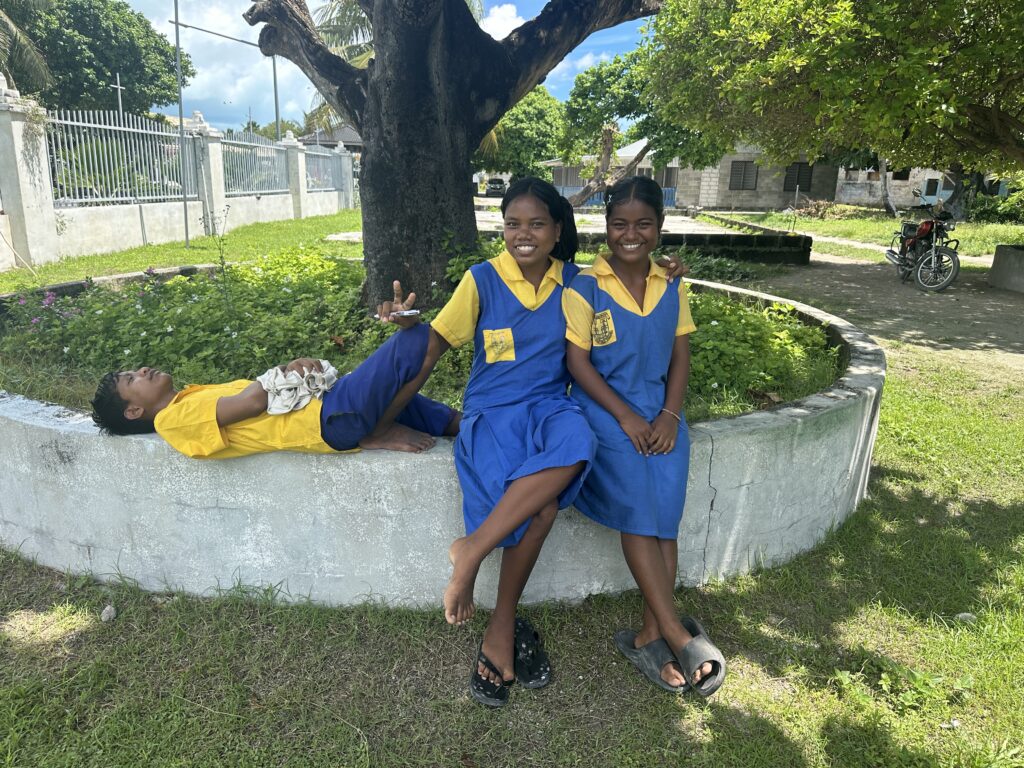
Despite quite challenging living conditions, the people we met were remarkably happy and friendly. Everywhere we went, people smiled, waved, and greeted us, often before we had a chance to say hello ourselves. We have experienced this warmth and hospitality on many of the smaller Pacific islands, but perhaps did not expect it to the same extent in a busy and densely populated place like Tarawa. It made walking around and exploring the island a very pleasant experience..
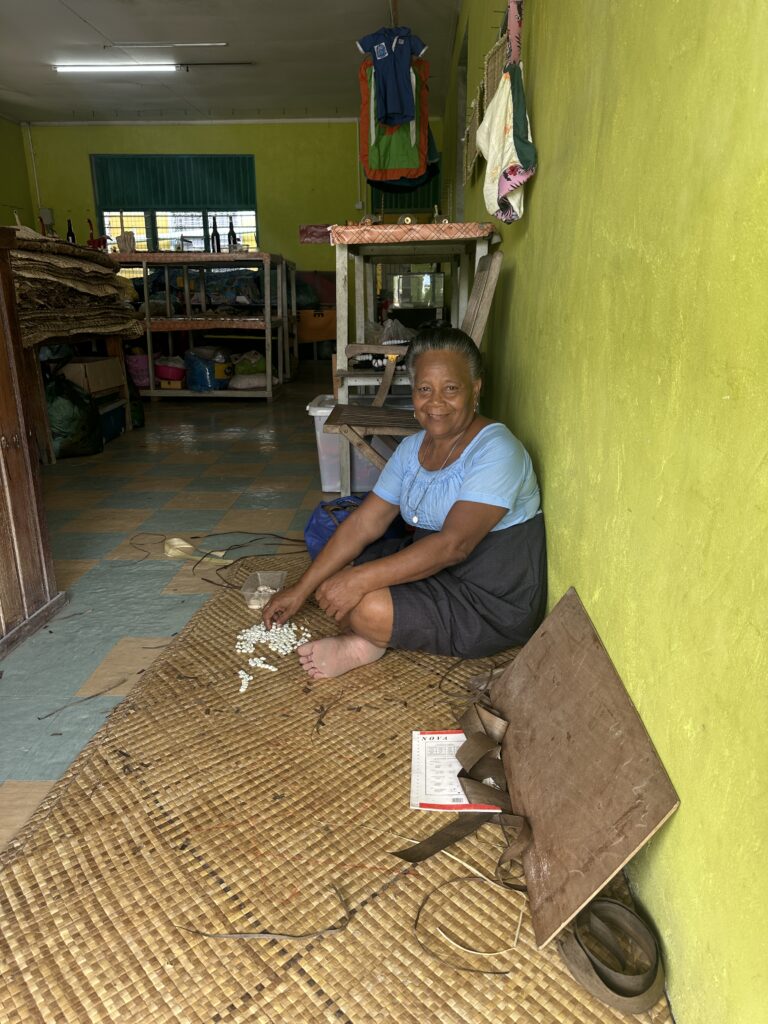
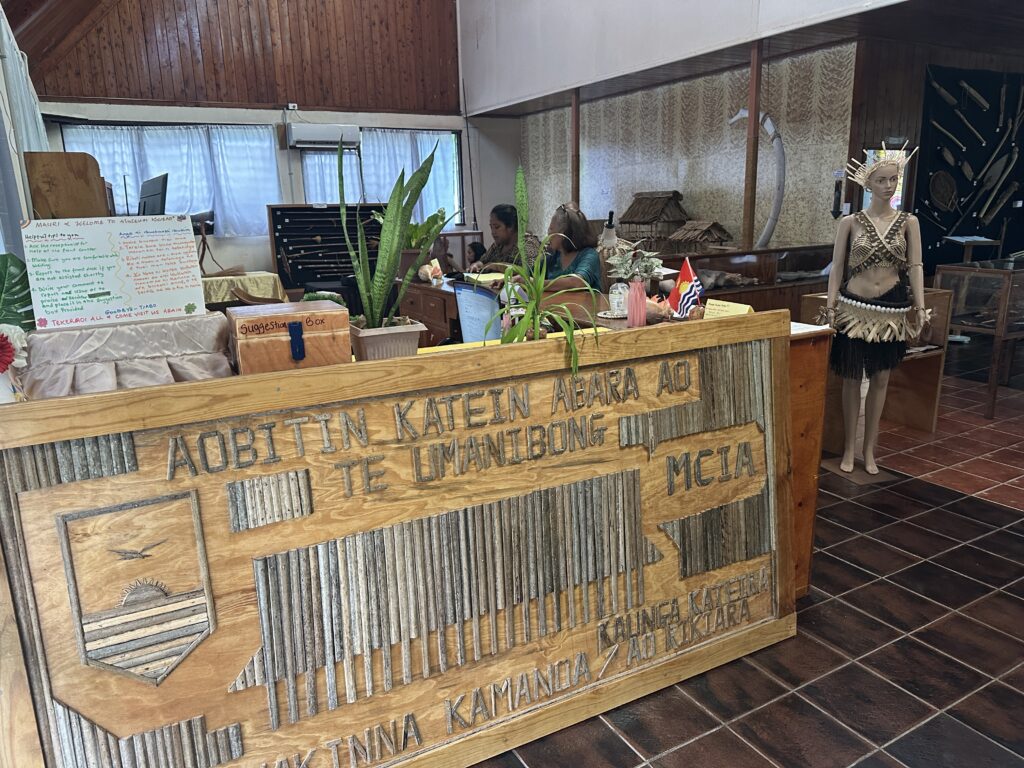
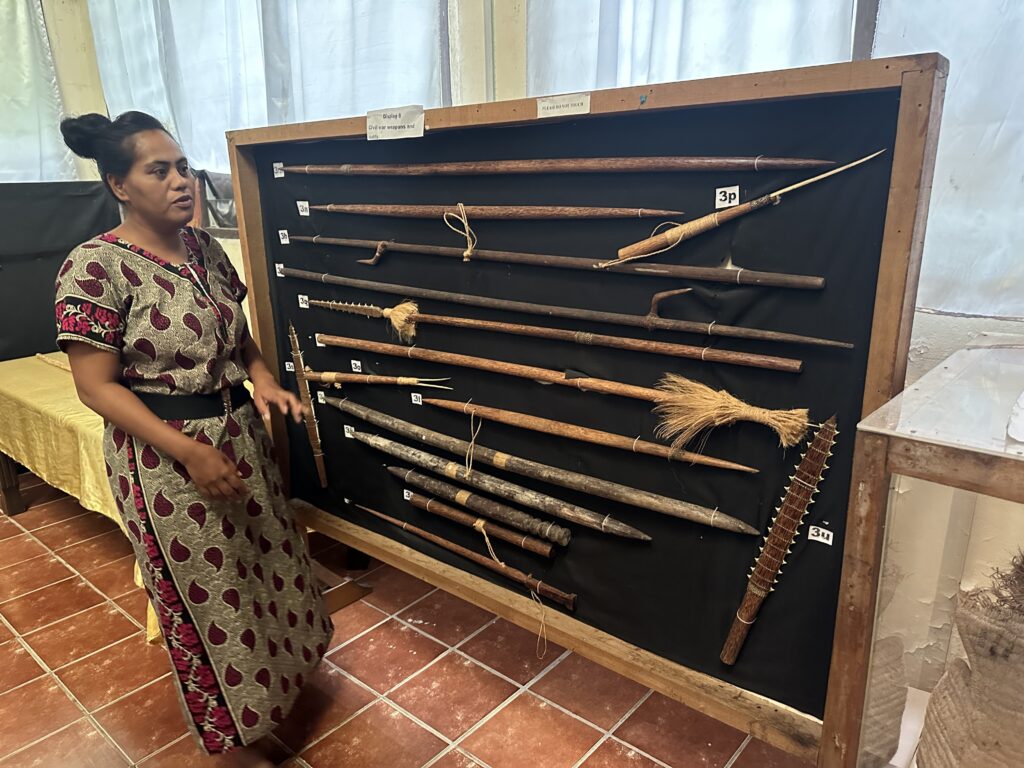
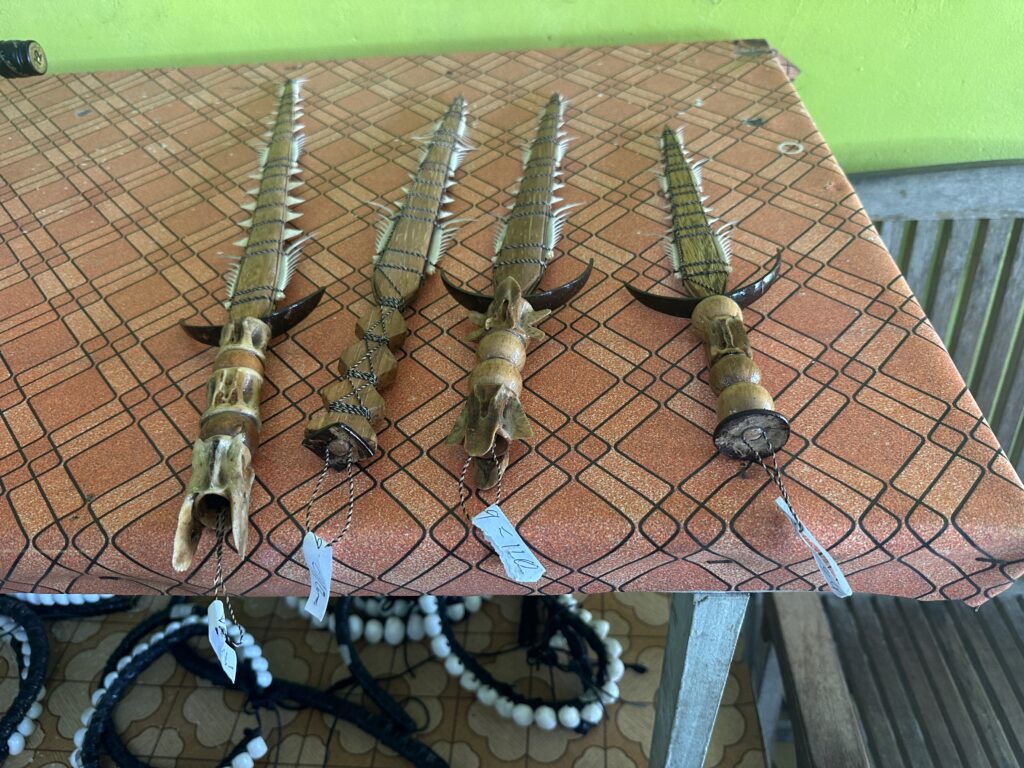
We visited the local museum, where our guide introduced us to the history and traditions of Kiribati. Unlike the predominantly Polynesian cultures we have experienced in several other Pacific nations, Kiribati is part of Micronesia. Although they share many similarities, including strong family and community ties and a close connection to the ocean, Micronesian cultures have their own distinct languages, traditions, social structures, and maritime heritage. It was interesting to learn more about these cultural differences as we continued our journey north through the Pacific.
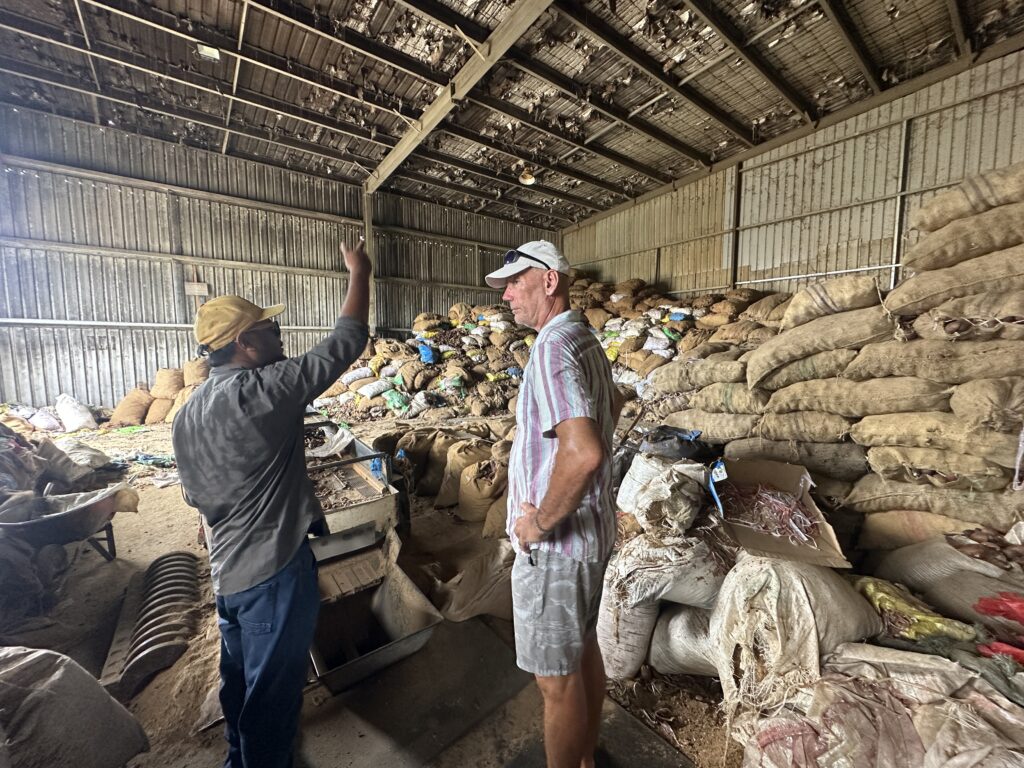
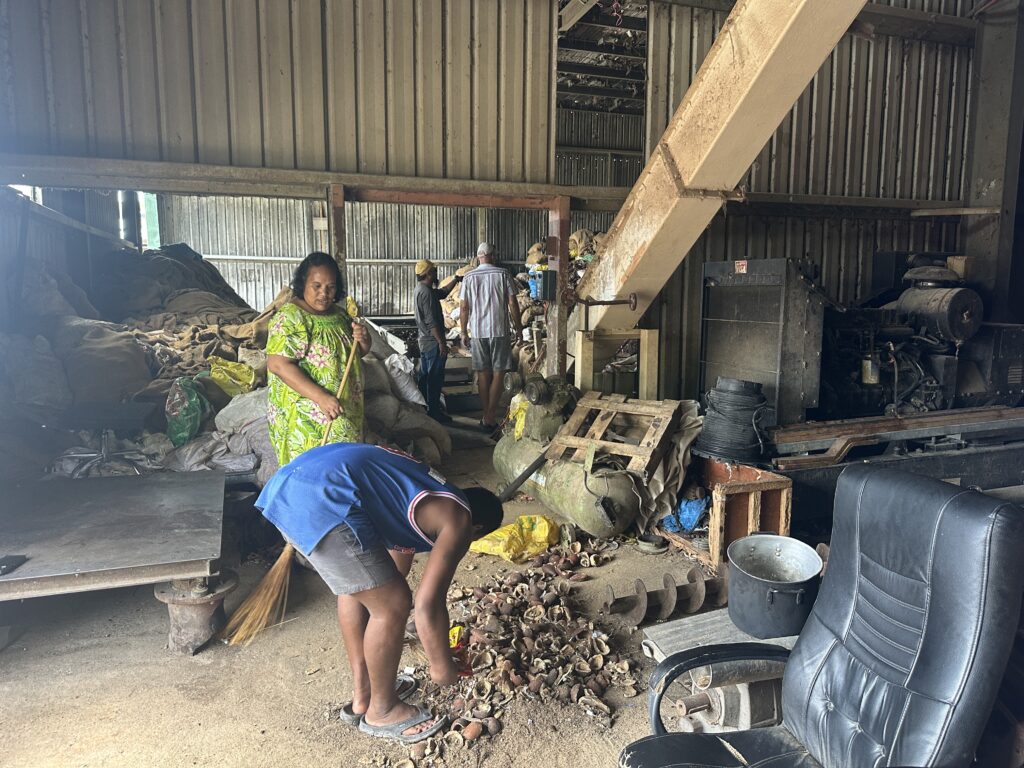
For many families, particularly on the outer islands, coconuts are the most important source of income. Farmers harvest and dry coconut flesh to produce copra, which is then sold for processing. The government subsidises copra production to support livelihoods in remote communities where alternative employment opportunities are limited.
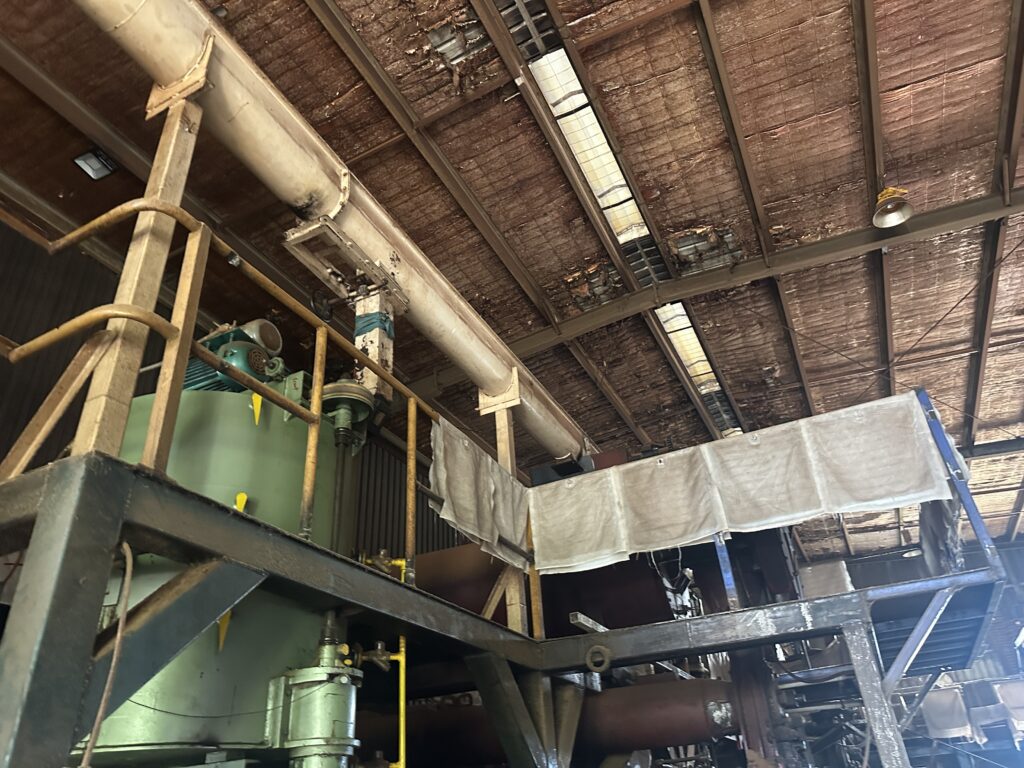
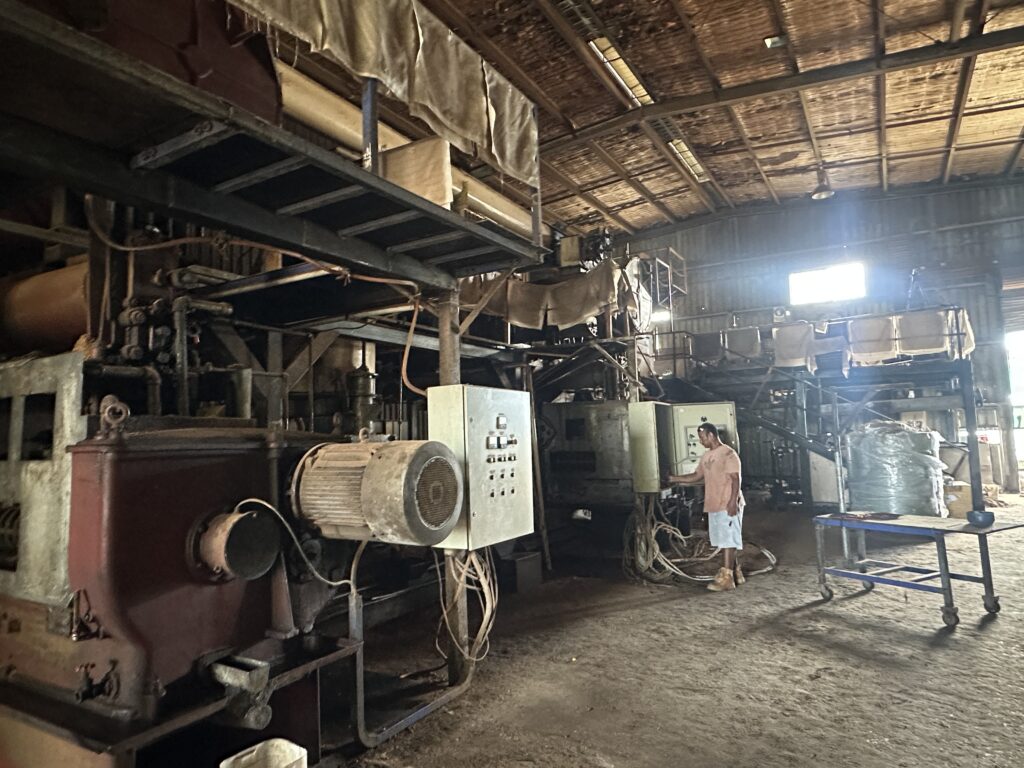
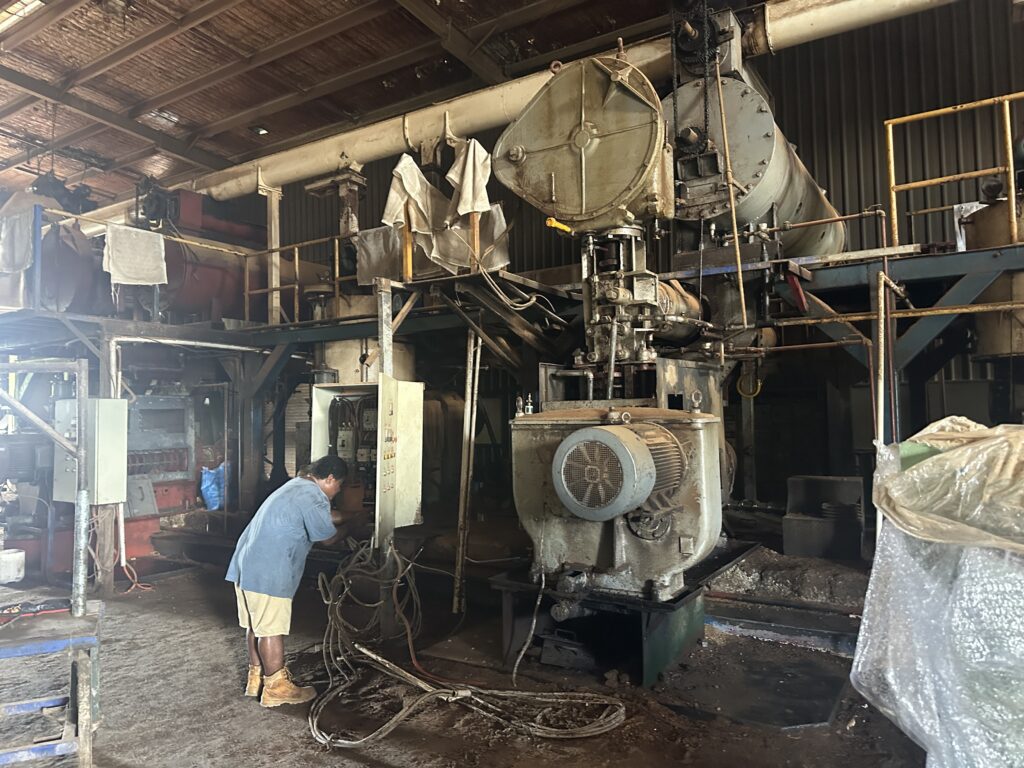
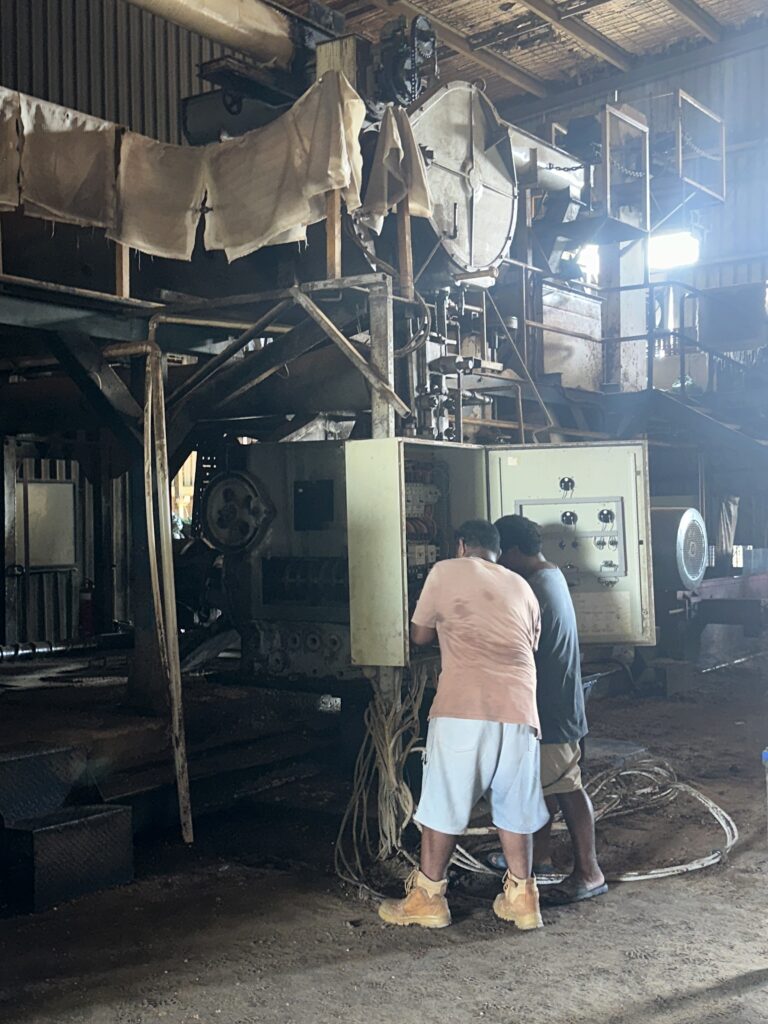
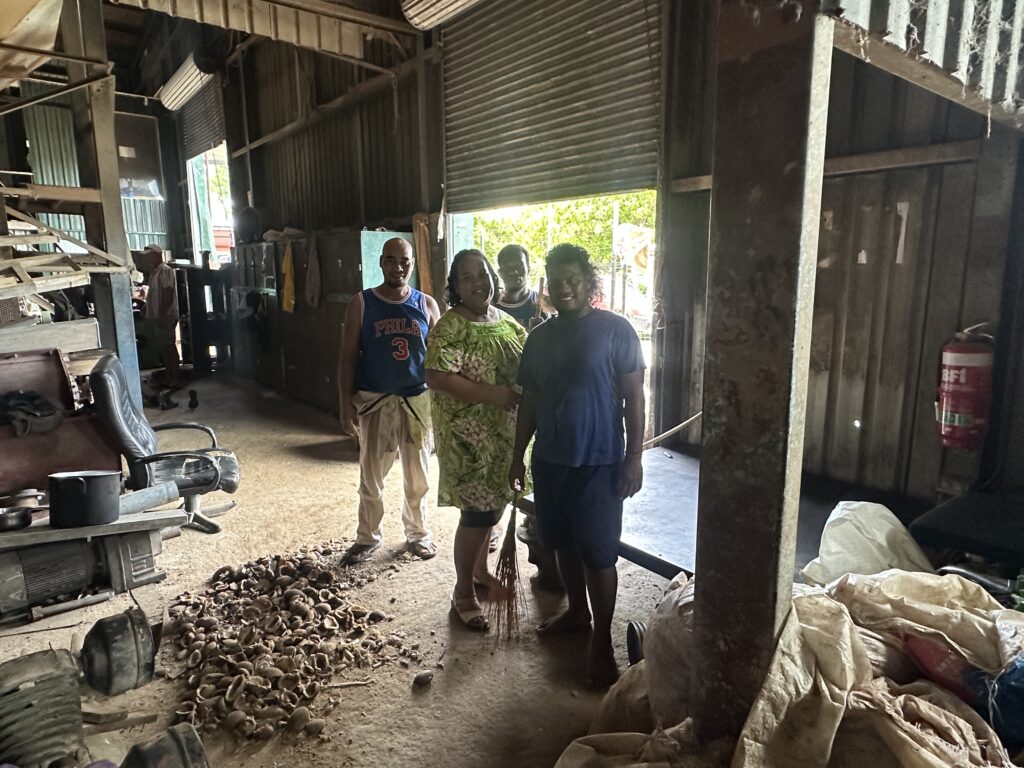
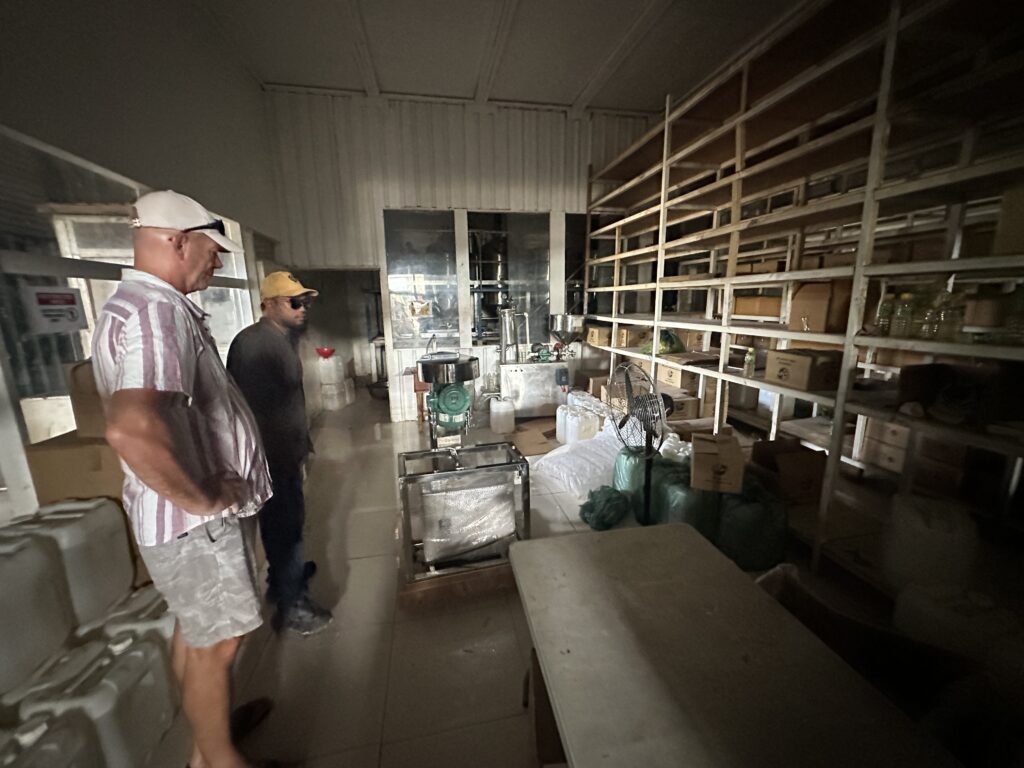
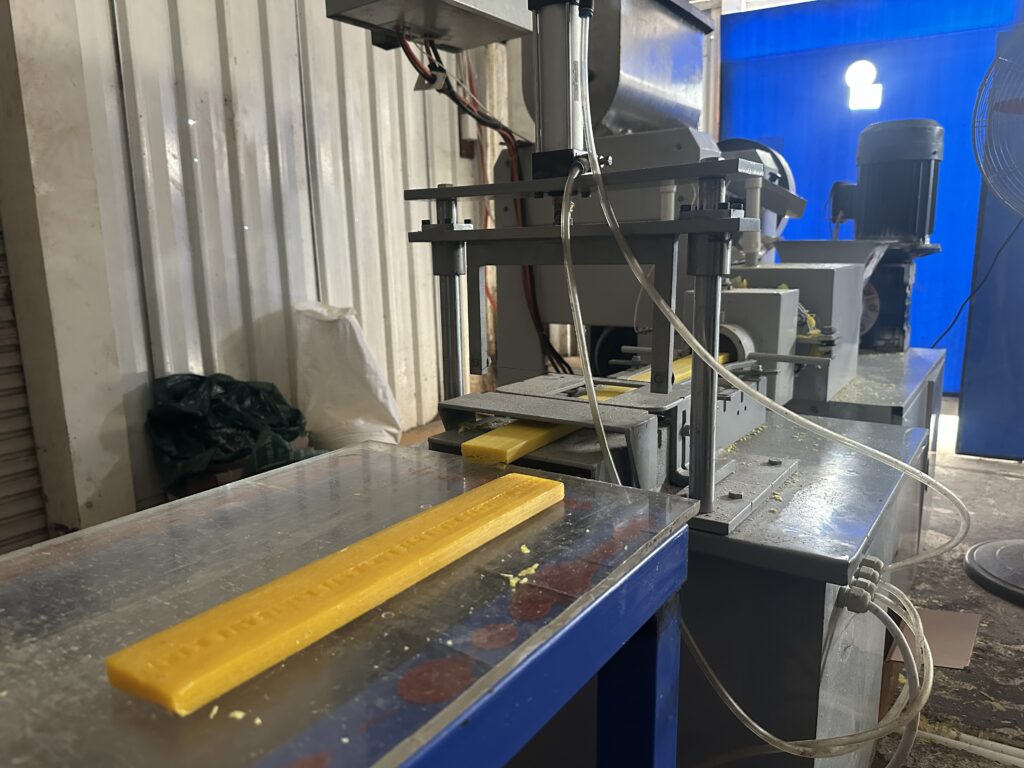
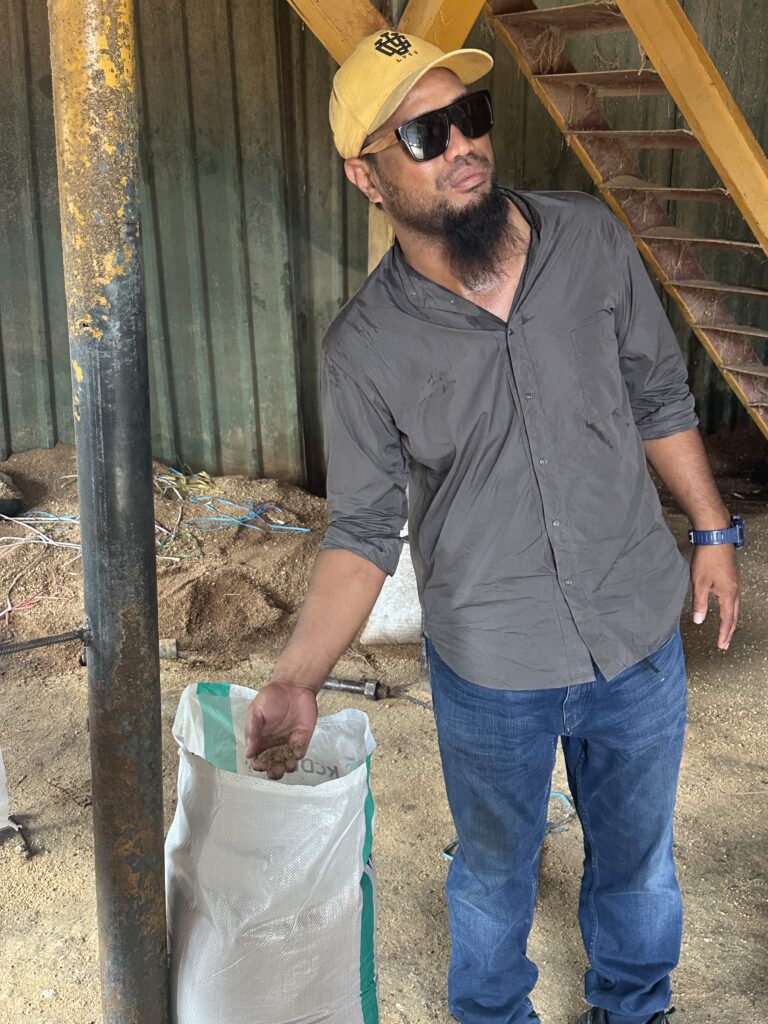
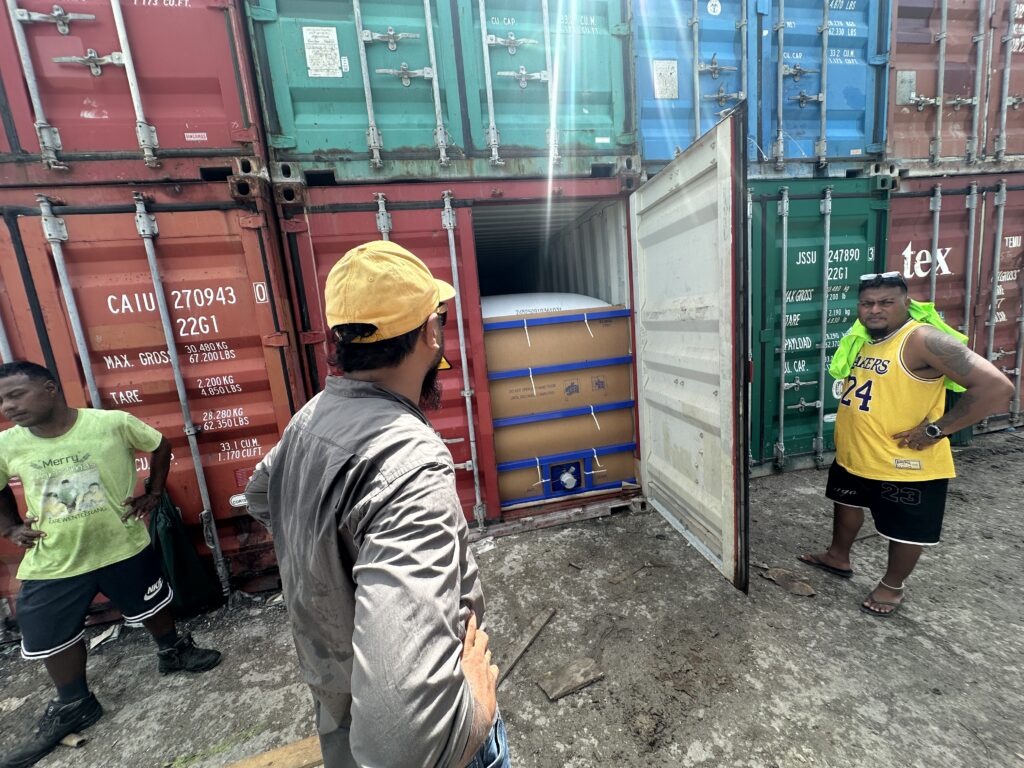
We got a guided tour at a government-owned coconut-processing factory, where we were shown how they make a surprising number of products from coconuts. Besides coconut oil and soap bars, they produce animal feed for chickens and pigs, among other things. It was interesting to see how much of the coconut can be utilized and how important this simple crop is to the local economy.
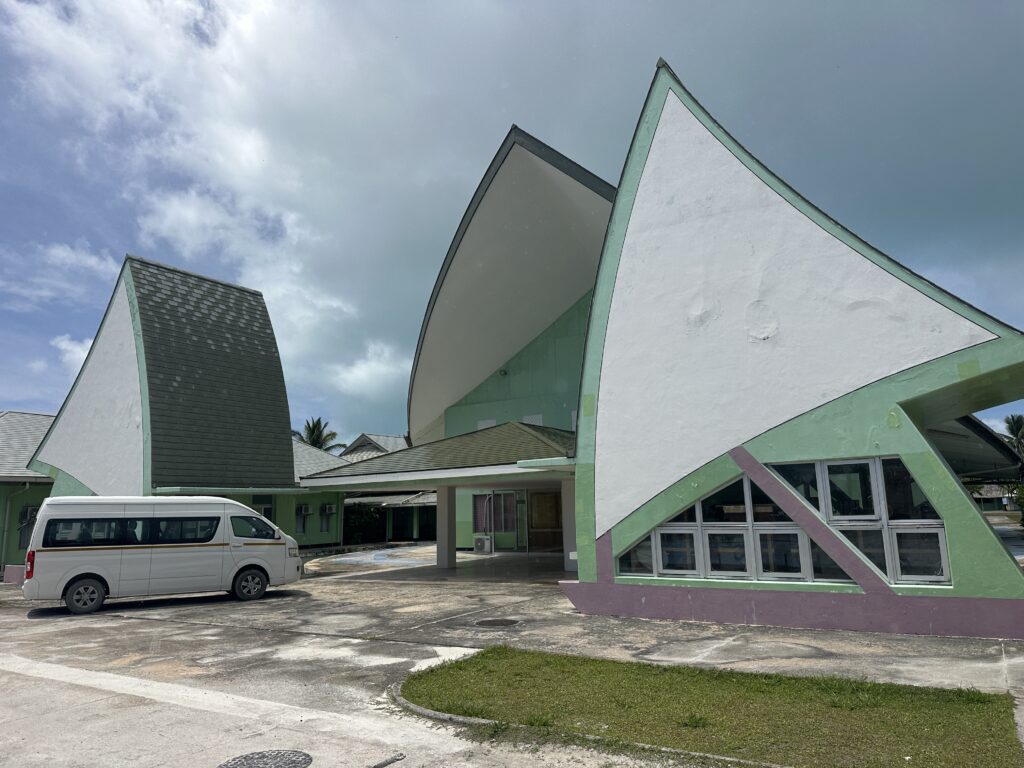
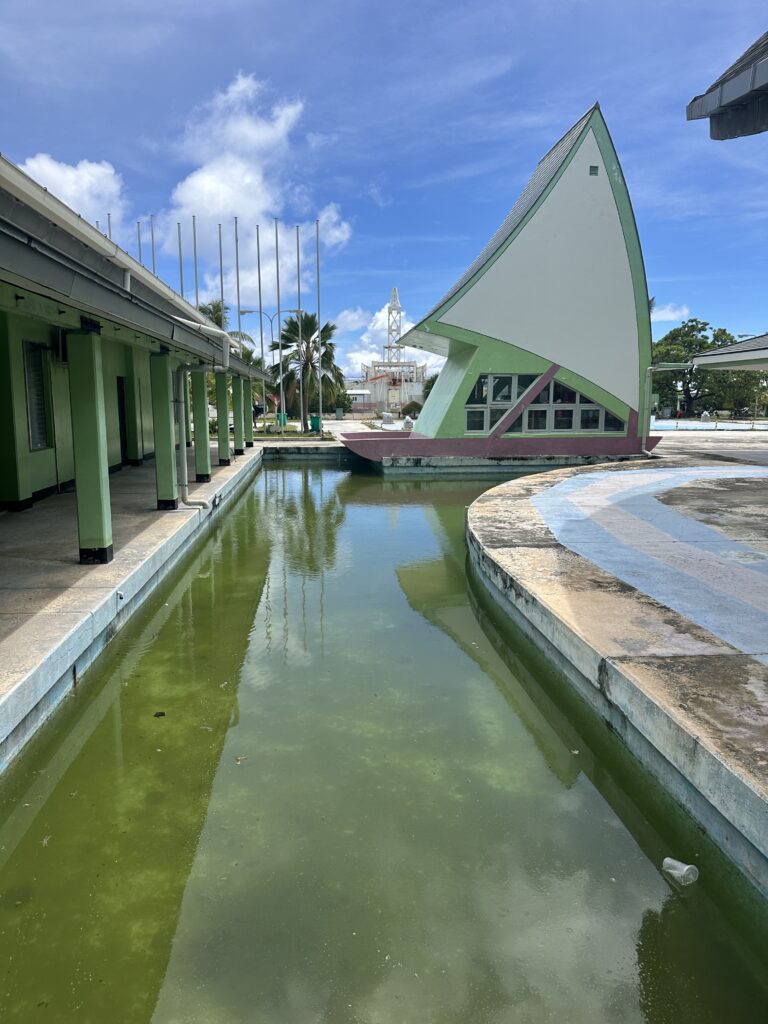
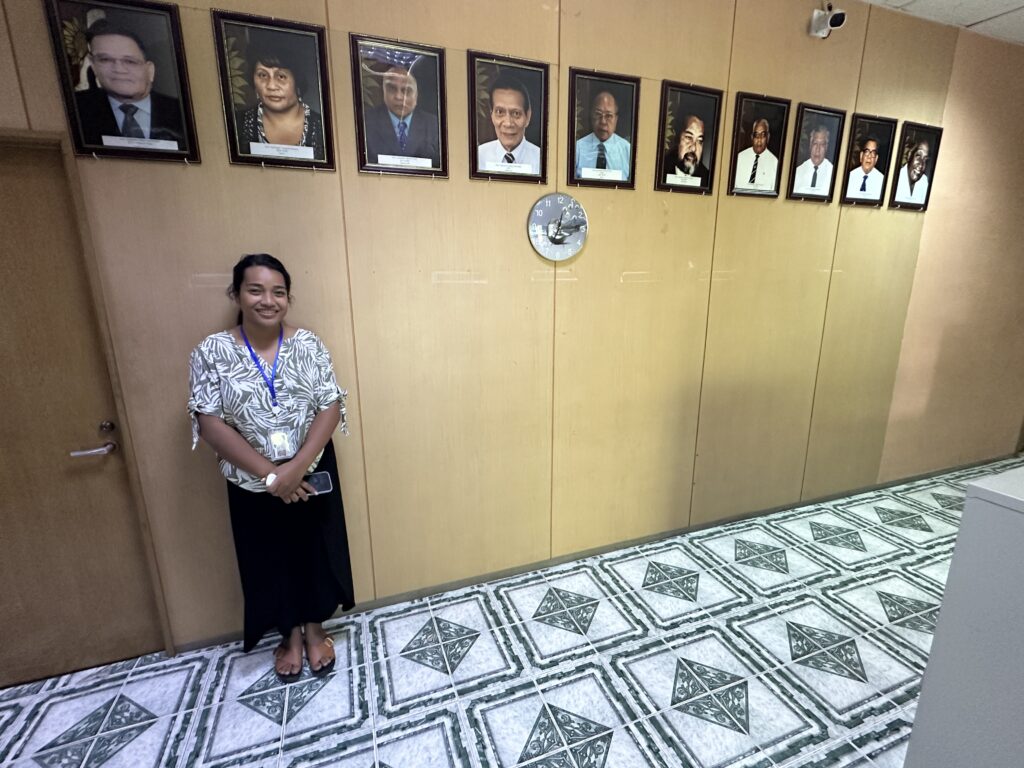
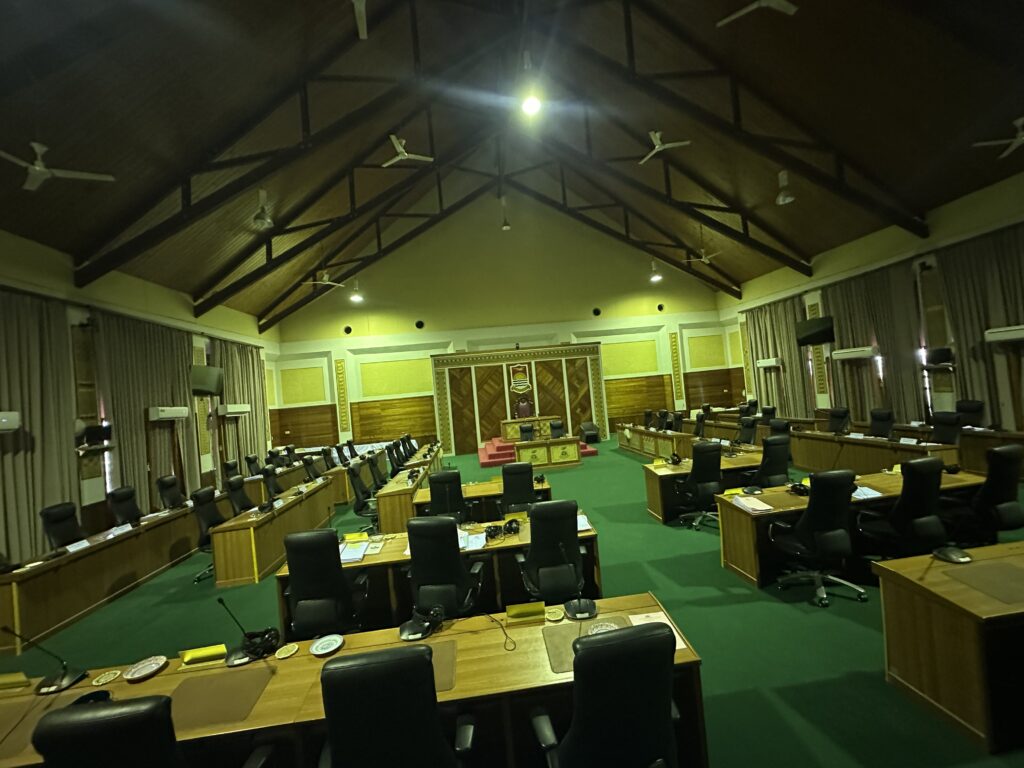
We also had the opportunity to visit the Kiribati Parliament, known as the Maneaba ni Maungatabu, where we were given a guided tour. It was interesting to learn more about how the country is governed and the challenges its politicians face. Health and education are among the country’s major priorities. Kiribati has high rates of diabetes and other non-communicable diseases, while overcrowding and inadequate sanitation contribute to public health problems. Providing education and healthcare across islands separated by hundreds or even thousands of kilometers is also expensive and logistically challenging.
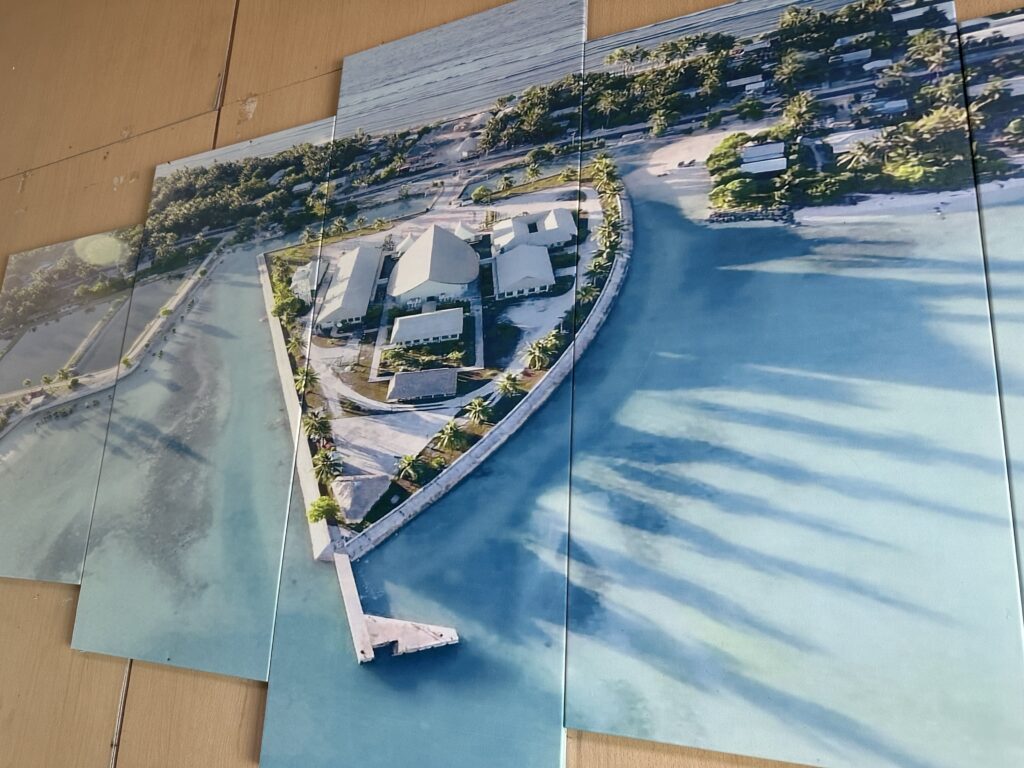
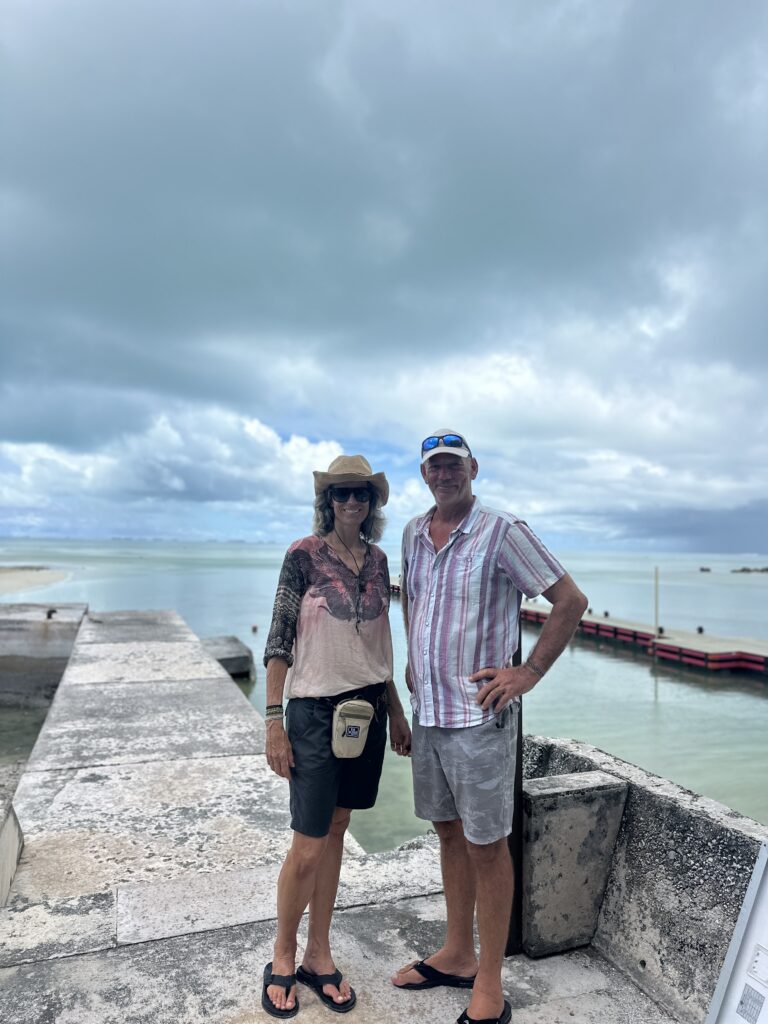
Most of Kiribati’s islands rise only a few meters above sea level, making them vulnerable to coastal erosion, flooding, and saltwater intrusion. We saw several sign of the challenges this nation has as a result of climate changes.
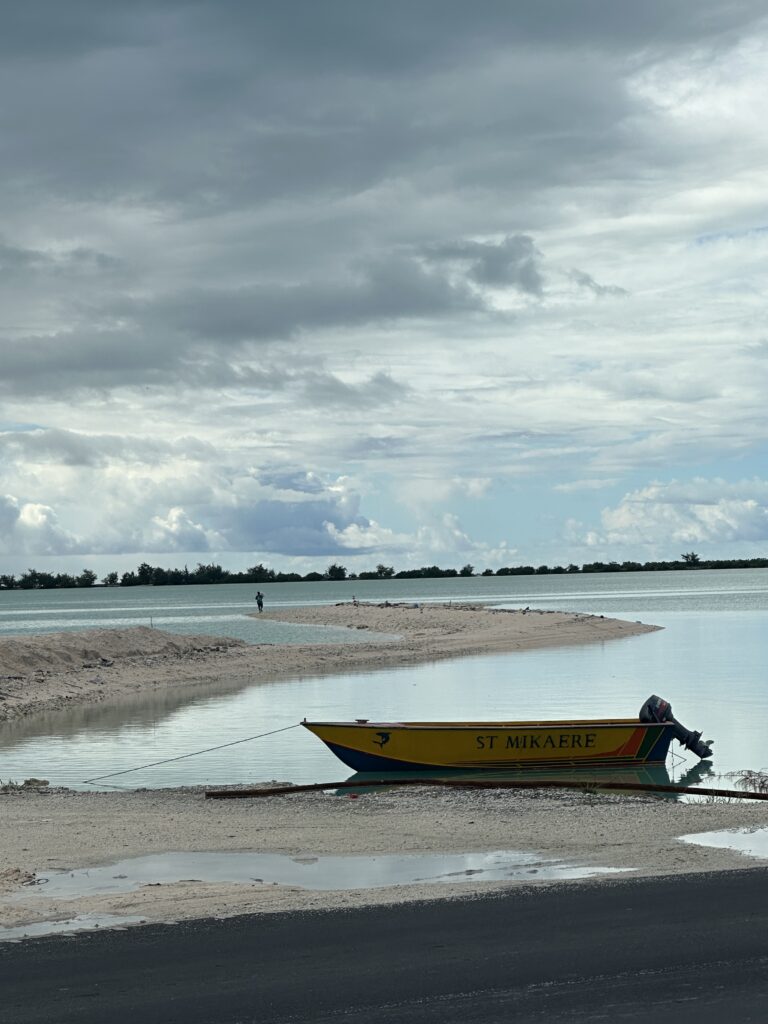
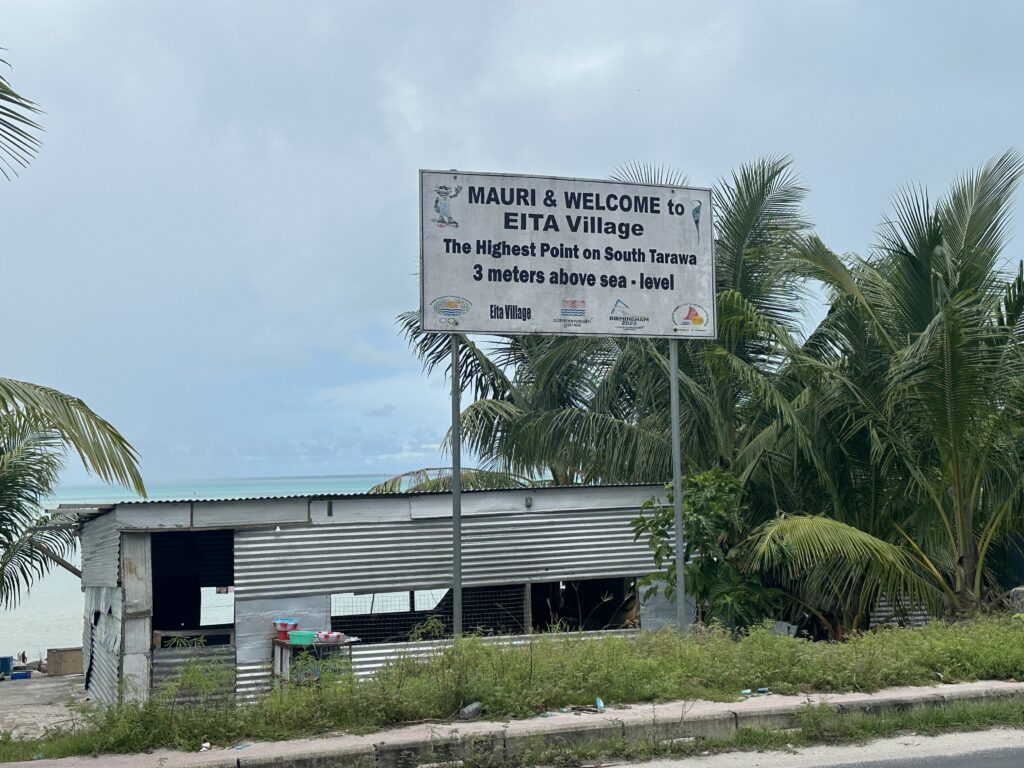
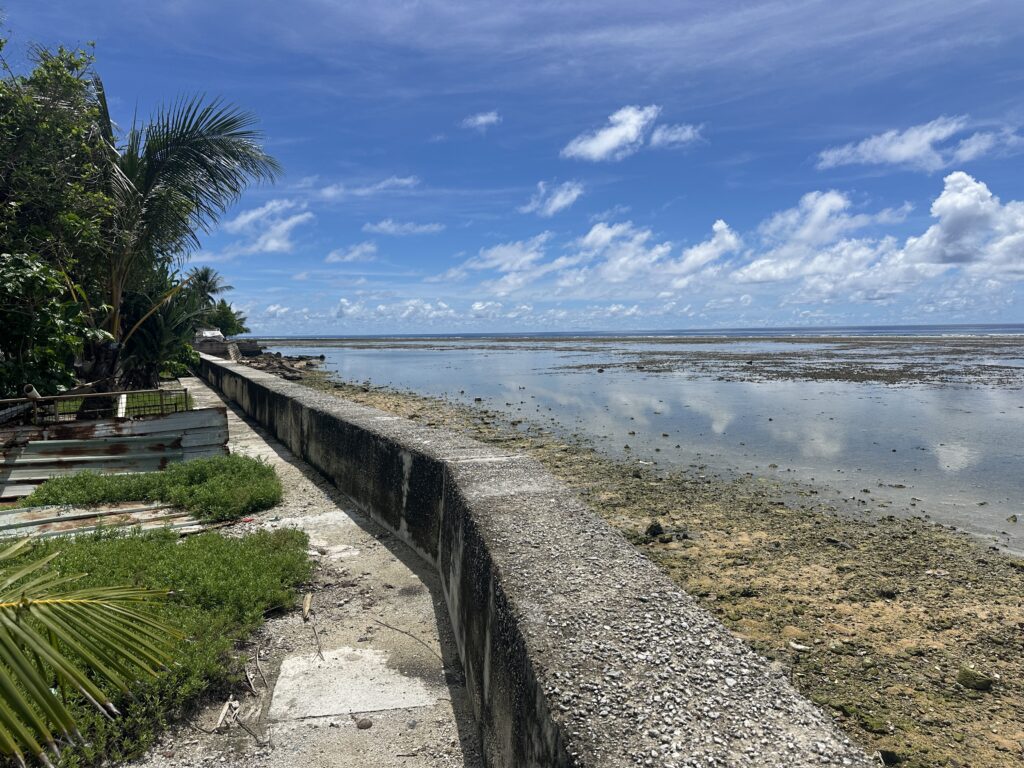
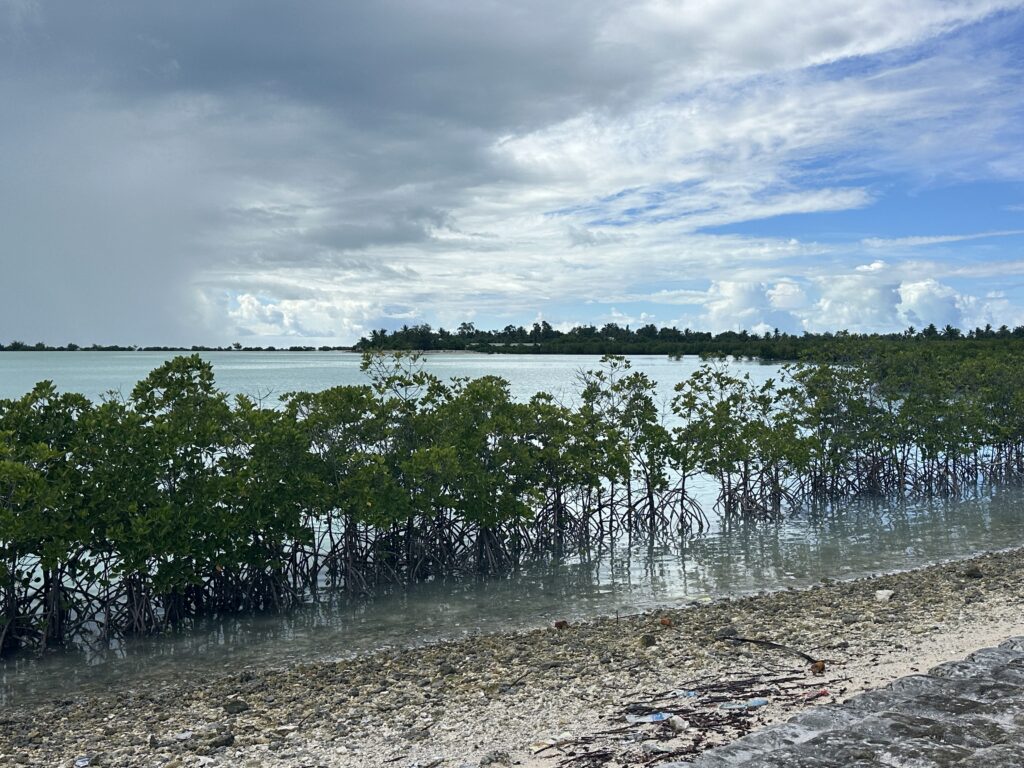
Freshwater is already a scarce resource, particularly on densely populated South Tarawa. With a growing population and very limited land available, the pressure on housing, infrastructure, and public services is considerable. Having recently visited Tuvalu, we recognized many of the same challenges, although the population density and scale of development in Tarawa made the situation feel quite different.
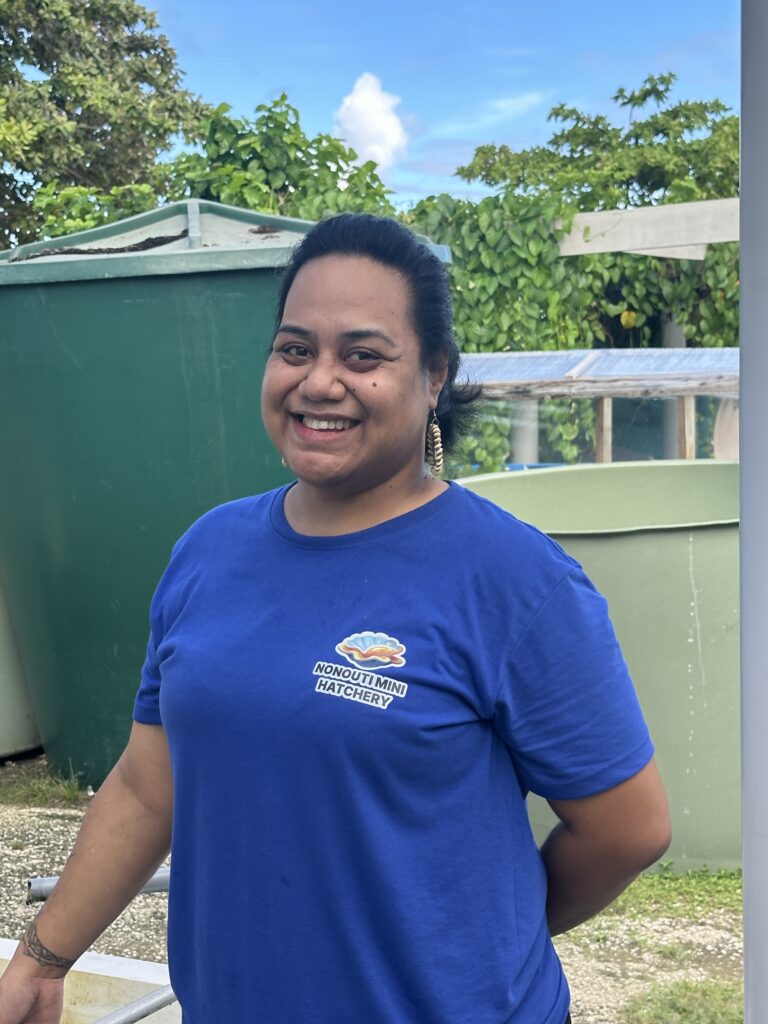
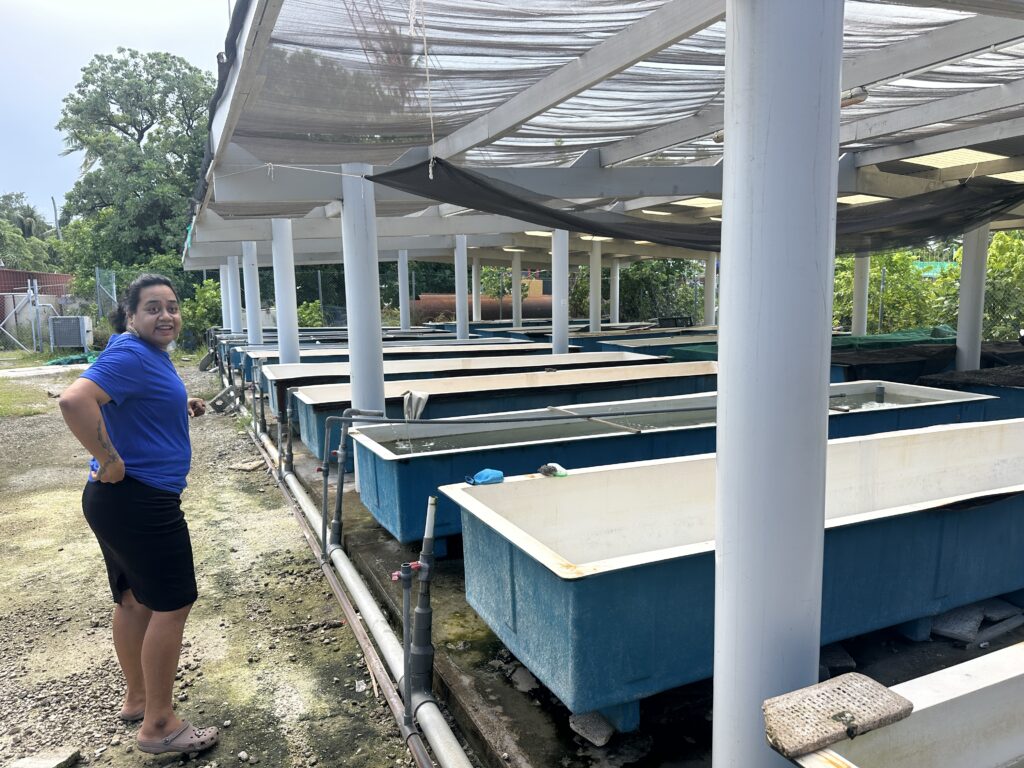
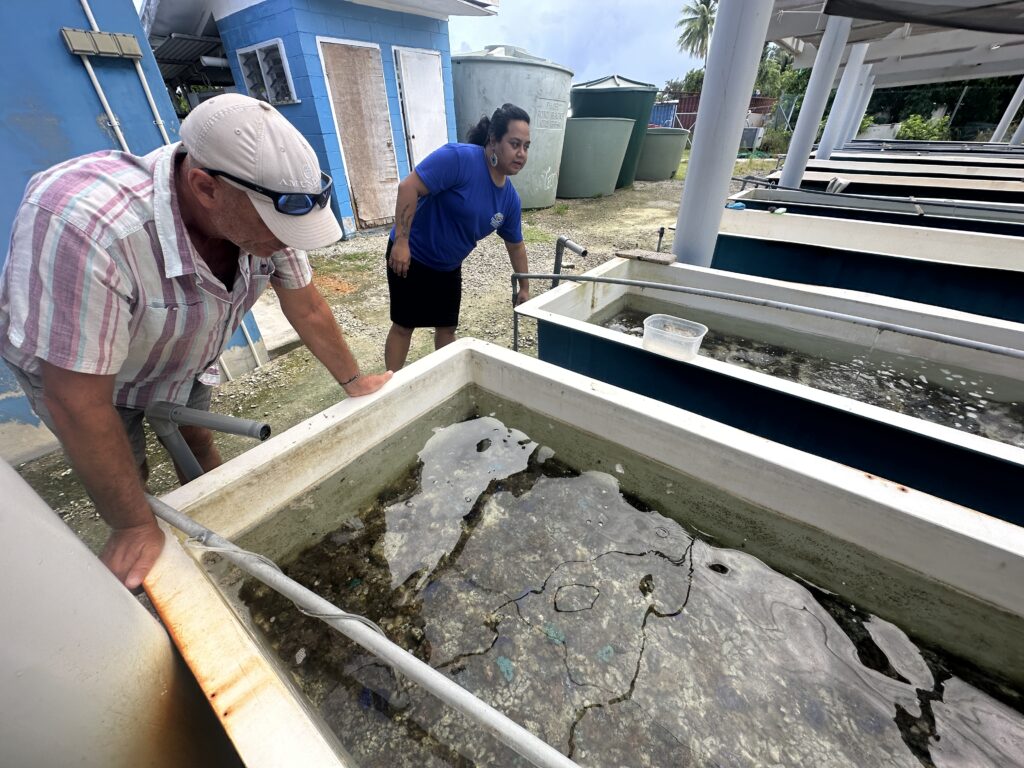
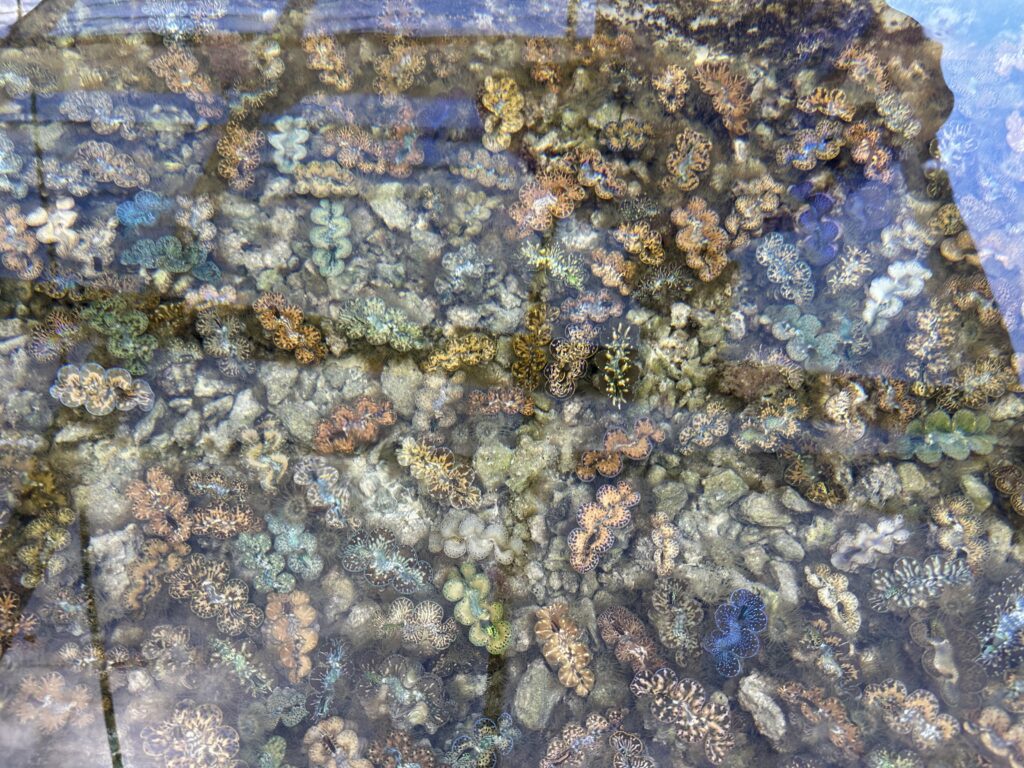
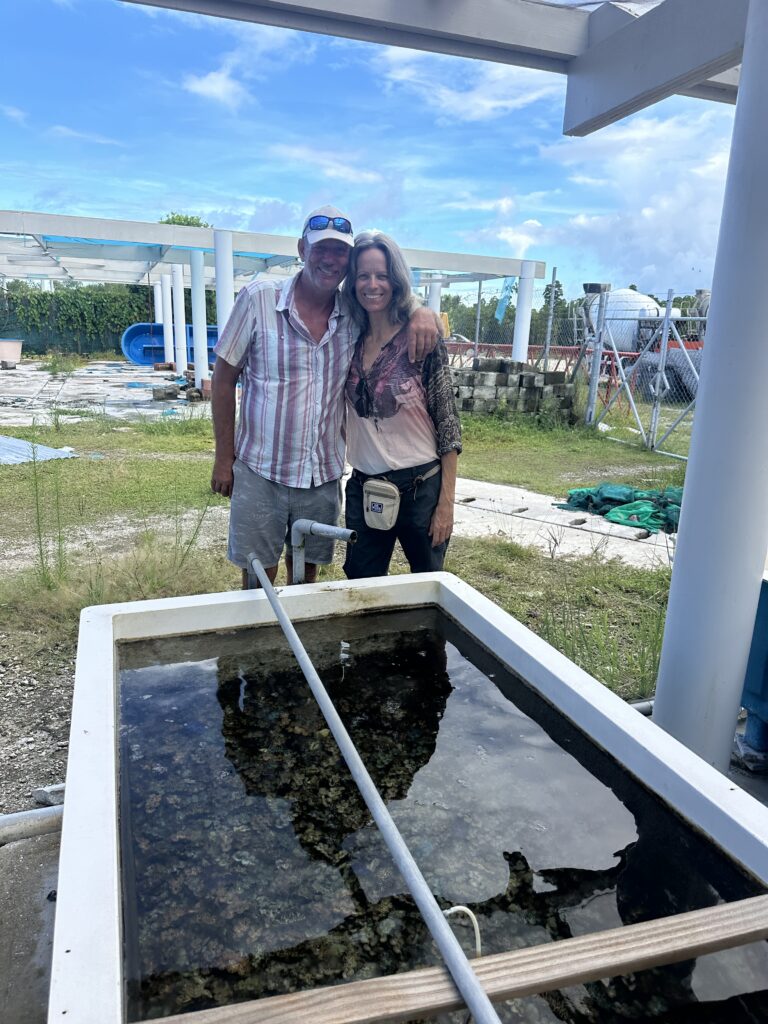
Another interesting visit was to a government-run marine research and aquaculture centre, where a marine scientist kindly gave us a tour. They were cultivating giant clams, known for their beautiful and colorful mantles, as well as fish. Giant clams play an important role in coral reef ecosystems, and breeding programs can help support conservation and sustainable aquaculture.
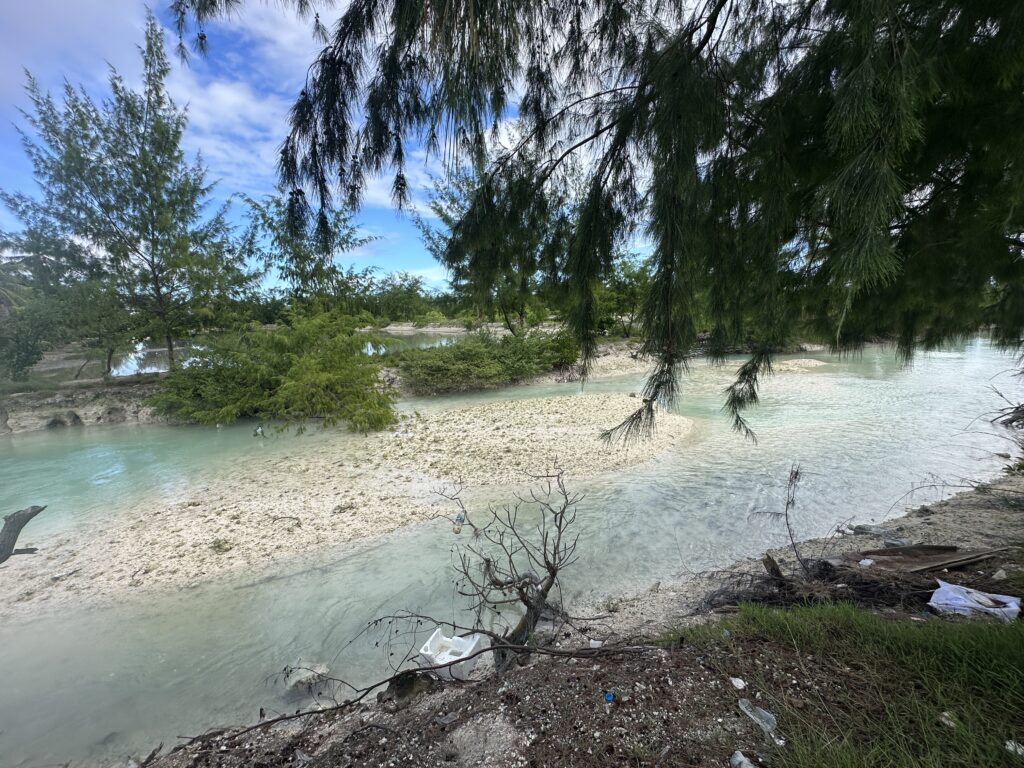
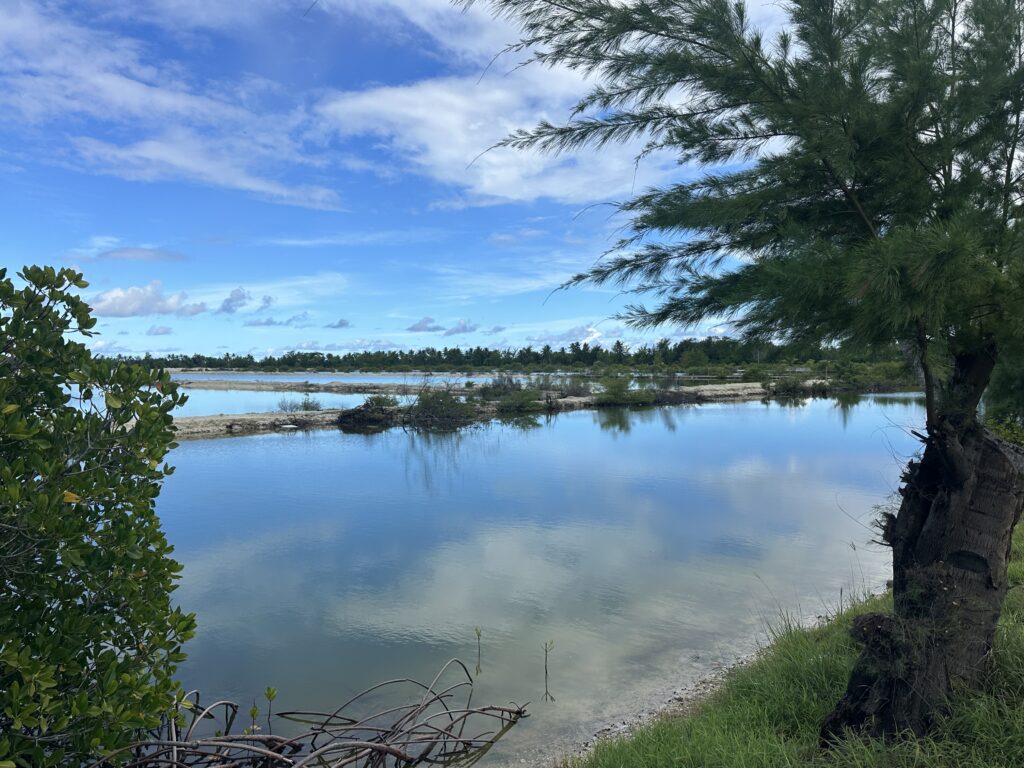
On our way to the marine centre, we passed an enclosed area of the lagoon used for raising fish. They were milkfish ponds, a traditional form of aquaculture in Kiribati where fish are grown in shallow coastal enclosures before being harvested.
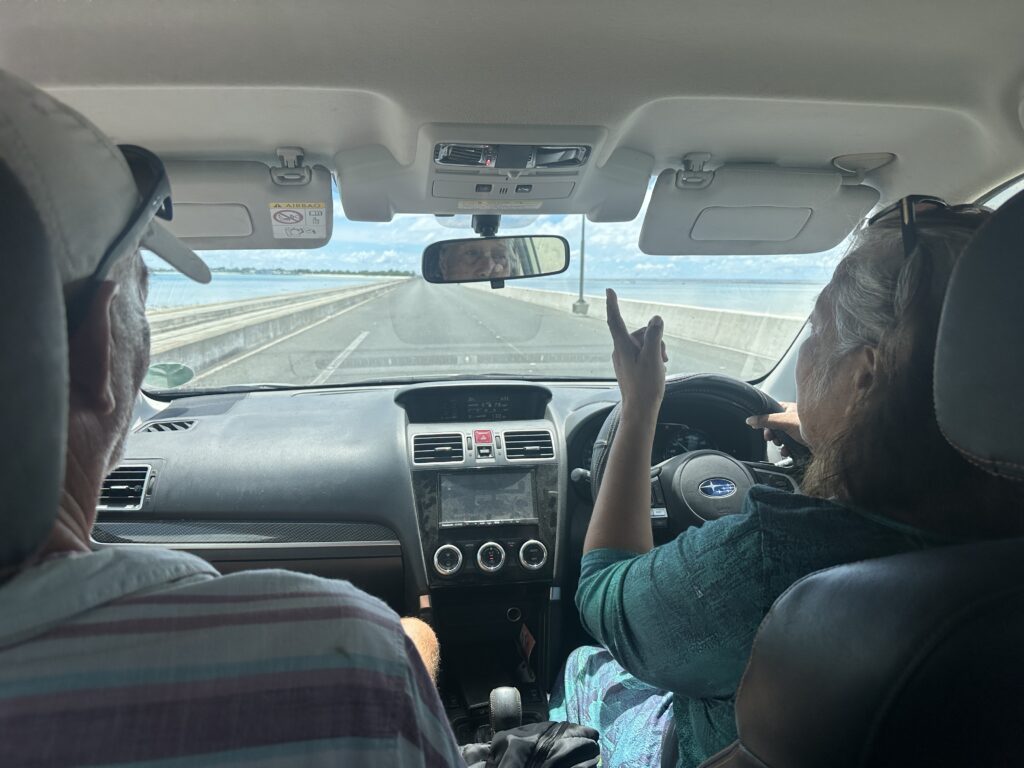
China’s presence in Kiribati was difficult to miss. In addition to the many Chinese fishing vessels around Betio, a major road and bridge construction project was underway on South Tarawa, carried out by a Chinese construction company. The project is intended to improve transport connections along the narrow atoll, where the existing infrastructure is under considerable pressure.
China’s growing influence in Kiribati has also been the subject of political debate. In 2019, Kiribati ended its diplomatic relationship with Taiwan and established relations with Beijing. China subsequently reopened its embassy in Tarawa, and the two countries have developed closer economic and political ties.
Kiribati’s strategic location in the central Pacific makes it important to countries competing for influence in the region, including China, the United States, and Australia. For a small nation with significant development needs, foreign investment offers opportunities, but also raises questions about economic dependence and political influence.
What struck us during our stay was the contrast between the enormous foreign fishing vessels, the large infrastructure projects, and the modest conditions in which many local people live. Yet our strongest impression of Tarawa was not only of the challenges facing the country, but also of the friendly people who welcomed us with smiles and greetings wherever we went.
Our visit to Tarawa has given us a different impression of Kiribati from many of the other Pacific islands we have visited. However, Tarawa is only one part of this vast and widely dispersed country. We are planning to visit two of the outer atolls, Abaiang and Butaritari, before continuing north towards the Marshall Islands.
With much smaller populations, these islands are less urbanized, and people depend more directly on fishing, coconut farming, and their local communities. We are curious to see how everyday life differs from the crowded streets of South Tarawa, and what challenges and opportunities people face on these more remote islands.